What happened
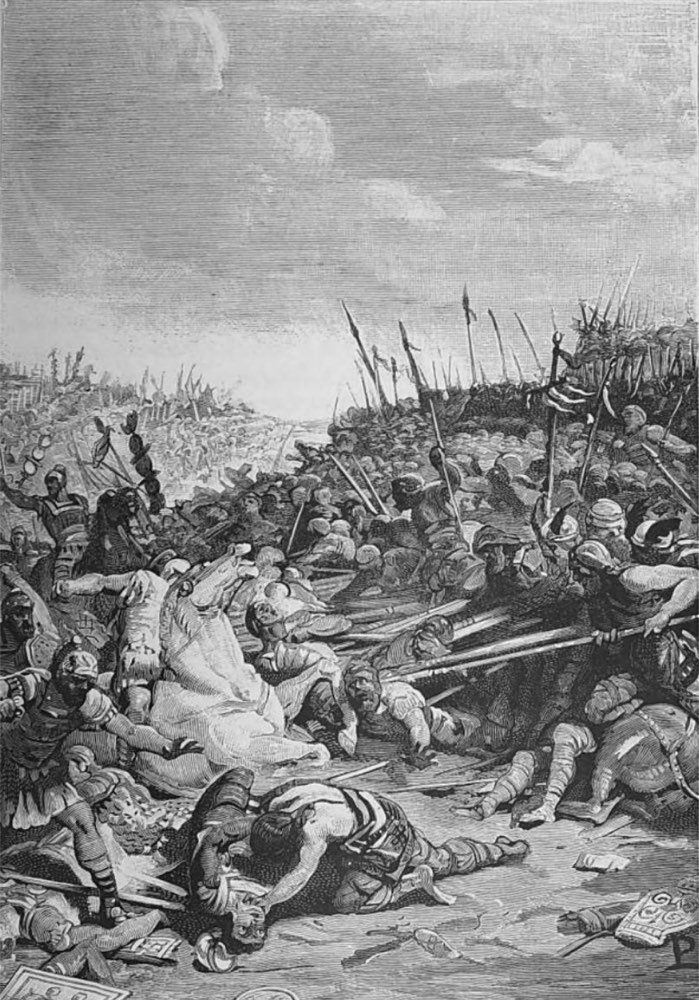
The Goths who crossed the Danube in 376 came as refugees from the Huns and were admitted by an empire that then let its officials starve and exploit them, and two years later they destroyed an emperor. Valens attacked near Adrianople without waiting for his nephew's western army, in heat, after a march that had given his troops neither food nor water. The Gothic cavalry, which had been away foraging, returned while the battle was underway and struck the Roman flank, and the infantry was packed so tight it is said the men could not raise their weapons. Valens died somewhere in the collapse and his body was never identified. Ammianus Marcellinus, who wrote the account, called it the worst defeat since Cannae.
Going Deeper
For a century Adrianople was taught as the day heavy cavalry defeated infantry and the Middle Ages began, a thesis argued by Oman and others and now thoroughly abandoned, since the Gothic force fought largely on foot and Roman armies kept winning battles for a long time afterward. Nearly all of it rests on Ammianus, the last great Latin historian, who was writing with a clear view about the incompetence and greed of the officials who provoked the crisis, and there is no Gothic account at all. The settlement of 382, which allowed Goths to live inside the empire under their own leaders, is where the real argument now sits, between historians who see an empire accommodating newcomers and those who see the beginning of its dissolution. Modern writers reach for 376 whenever they want a refugee crisis to carry a lesson, and late-antique specialists spend a good deal of energy explaining why the parallel does not hold.
Three new battles every day. Tap the globe where each one happened.
Play today's battles