What happened
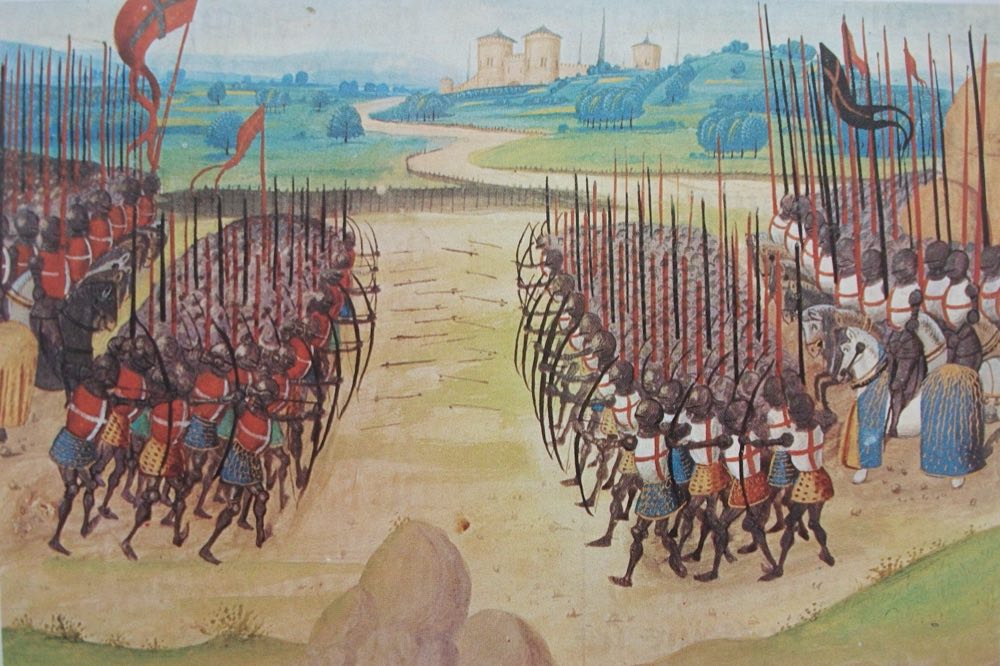
Henry V's tired and disease-stricken English army was intercepted by a larger French force while marching toward Calais in October 1415. Confined between woods and advancing over rain-soaked ground, French men-at-arms were compressed into a narrow front under heavy English and Welsh longbow fire before close combat engulfed the field. French losses were severe, especially among the nobility, while English losses were comparatively light. Fought on Saint Crispin's Day, Agincourt became one of the most famous victories of the Hundred Years' War and was later immortalized by Shakespeare's 'band of brothers' speech.
Going Deeper
Agincourt owes its immortality less to strategy than to Shakespeare, whose Henry V speech made a muddy attritional slaughter into the English language's defining battle rhetoric - and historians have spent decades separating the play from the record. The great modern controversy is numbers: traditional accounts had the English outnumbered four or six to one, while revisionist work argues the French advantage was far smaller (roughly four to three, closer to even), which changes the miracle into something more explicable by terrain, mud, and command chaos. Henry's order to kill the French prisoners, long softened in English telling, is now confronted directly by scholars debating whether it was battlefield necessity or atrocity. The longbow's mythic role has also been trimmed - arrows disordered and maimed, but the killing was mostly done hand to hand in the press.
Three new battles every day. Tap the globe where each one happened.
Play today's battles