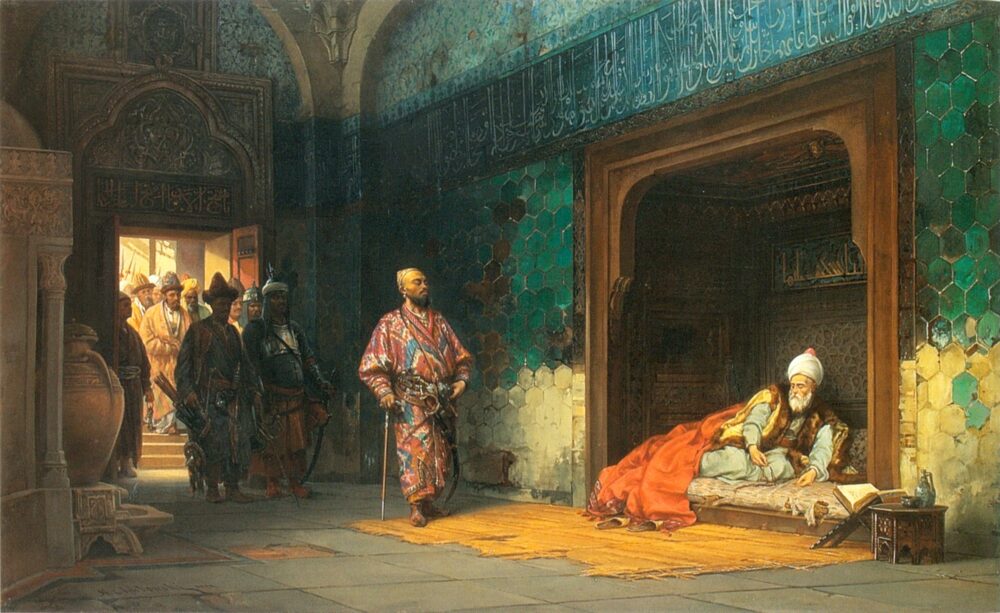
What happened
On July 28, 1402, the Central Asian conqueror Timur destroyed the Ottoman army on the plain northeast of Ankara and captured Sultan Bayezid I - the only time an Ottoman sultan was ever taken in battle. Timur had seized the region's water sources and stood between the Ottomans and their own base; in the battle, thousands of Anatolian Tatar and Turkoman troops defected from Bayezid's army to Timur, unraveling the Ottoman line. Bayezid, the 'Thunderbolt' who had crushed a European crusade at Nicopolis six years earlier, died in captivity within months; the story of Timur displaying him in a cage grew in later telling. The defeat plunged the Ottoman state into a decade of civil war among Bayezid's sons and lifted the siege then strangling Constantinople - postponing the city's fall by half a century. Timur turned east to invade China and died on the road, and his empire fragmented as fast as it had grown.
Going Deeper
Ankara fascinates historians as a genuine counterfactual pivot: Constantinople in 1402 was starving under Ottoman blockade, and without Timur's intervention its fall might have come fifty years early - meaning a Central Asian conqueror who never crossed into Europe reset the continent's timeline. The battle also punctures dynastic-inevitability narratives, since the Ottoman recovery from the Interregnum was anything but assured. Source criticism is central to studying it: Timurid chronicles glorify, Ottoman ones mourn and mythologize, and famous details - the iron cage above all - migrated from polemic into history and back out again as scholars traced their pedigree, with Marlowe's Tamburlaine cementing the cage in Western imagination. The mass defection mid-battle keeps Ankara in staff-college syllabi as a study in why composite armies of recently absorbed peoples fail under stress.
Three new battles every day. Tap the globe where each one happened.
Play today's battles