What happened
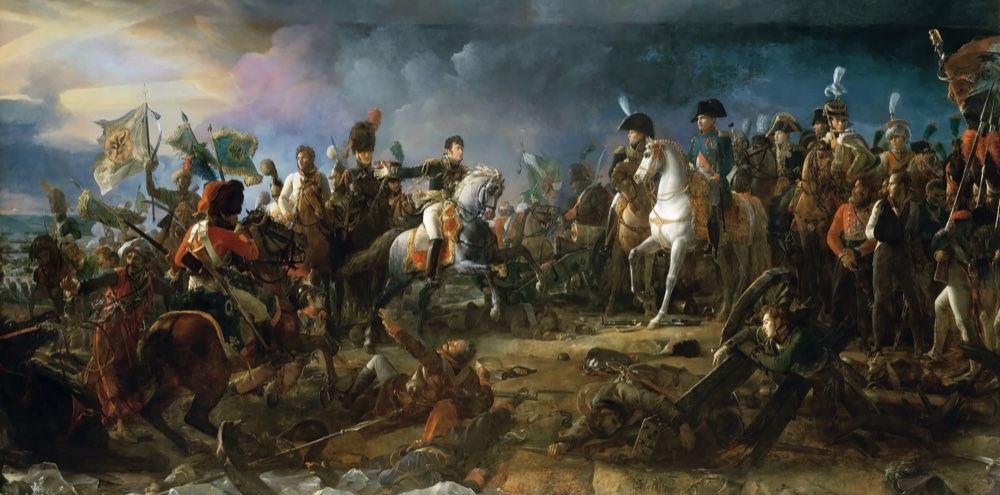
Napoleon's most celebrated battlefield victory came on December 2, 1805, one year after his imperial coronation. He deliberately appeared weak on his right, encouraging the larger Russo-Austrian army to move forces away from the Pratzen Heights. French troops then seized the heights, split the Allied army, and turned its center. The defeat shattered the Third Coalition and forced Austria to seek peace. Because Napoleon, Tsar Alexander I, and Emperor Francis II were all present, Austerlitz is remembered as the Battle of the Three Emperors and remains a classic study in operational deception and concentration of force.
Going Deeper
Austerlitz is also a study in how a victory is written, since Napoleon's bulletins described thousands of fleeing Allied soldiers drowning when French guns broke the ice on the ponds, a scene that entered every account and that the draining of those ponds shortly afterward did little to support. The bulletins were understood as propaganda at the time, and the French expression about lying like a bulletin dates from these years. The battle became a standard exhibit in nineteenth-century military theory, read by some as a demonstration of geometry and position and by others as the exploitation of an opponent's psychology, and staff colleges have been teaching one or the other version ever since. The field in Moravia carries a memorial to the dead of all three armies, built between 1910 and 1912 and then left unconsecrated until 1923 because a larger war intervened. It is often called the first peace monument in Europe.
Three new battles every day. Tap the globe where each one happened.
Play today's battles