What happened
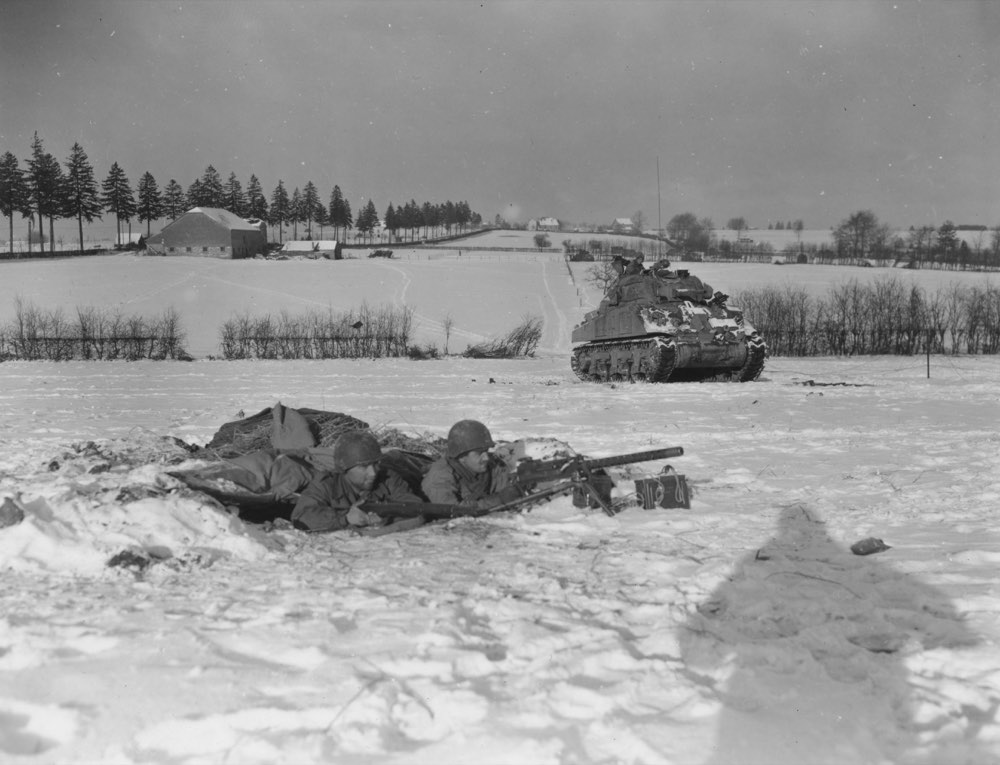
Hitler's last major offensive in the west hurled German armies through the snowbound Ardennes in December 1944, aiming to split the Western Allies and seize Antwerp. The surprise attack bent the American line into the 'bulge' that gave the battle its name and surrounded the defenders of Bastogne. When a German surrender demand reached the town, Brig. Gen. Anthony McAuliffe answered, 'NUTS!' Clearing weather restored Allied air power, Patton's Third Army broke through to Bastogne from the south, and by late January the German gains had been erased. More than 600,000 Americans participated, making it the largest battle fought by the U.S. Army in World War II and one of its bloodiest.
Going Deeper
The Ardennes offensive generated one of military history's great intelligence postmortems: Allied commands had signals intercepts and prisoner reports hinting at the buildup, but assumptions about German incapacity filtered them out - a case study still taught as confirmation bias in analysis. Bastogne's fame owes something to deliberate press management; the 101st Airborne's stand was real, but so was the less-celebrated defense of St. Vith and the northern shoulder, which many historians rate as equally decisive in wrecking the German timetable. McAuliffe's 'Nuts!' reply required an American officer to explain the idiom to the German truce party, and its legend was amplified within days by wartime reporting. Later scholarship has also restored the battle's grimmer edges, including the Malmedy massacre trials and the cost to Belgian civilians caught in the salient.
Three new battles every day. Tap the globe where each one happened.
Play today's battles