What happened
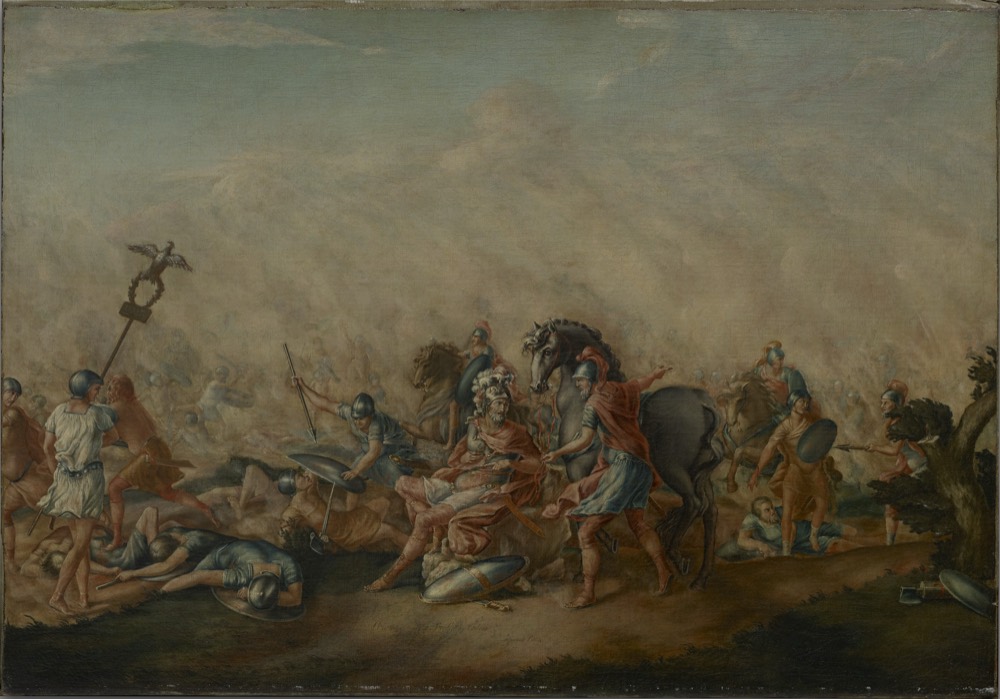
Hannibal, outnumbered deep inside Roman territory, arranged his army so that its center yielded under the Roman advance while veteran African infantry held back on the flanks. As the Romans pressed inward, Hannibal's cavalry defeated the Roman horse and returned behind the legions, completing a double envelopment. Ancient sources report more than 50,000 Roman dead in a single day, although exact numbers cannot be verified. Rome refused to negotiate and eventually won the war, but Cannae became the classic example of encirclement studied by later commanders for centuries.
Going Deeper
Cannae became the West's textbook battle of annihilation - the double envelopment every staff college from Prussia to Leavenworth tried to replicate, with Schlieffen literally titling his doctrine study 'Cannae.' The irony historians emphasize: Hannibal won the perfect battle and still lost the war, making Cannae equally a lesson in the limits of tactical genius against a state that refused to negotiate and could regenerate armies. Casualty figures come from Polybius and Livy, writing 70 and 200 years later with Roman sources, and modern scholars trim their numbers while accepting that the killing was, by any ancient standard, extraordinary - tens of thousands of men in an afternoon of muscle-powered violence. The exact field beside the Aufidus is still argued, since the river has shifted course over two millennia.
Three new battles every day. Tap the globe where each one happened.
Play today's battles