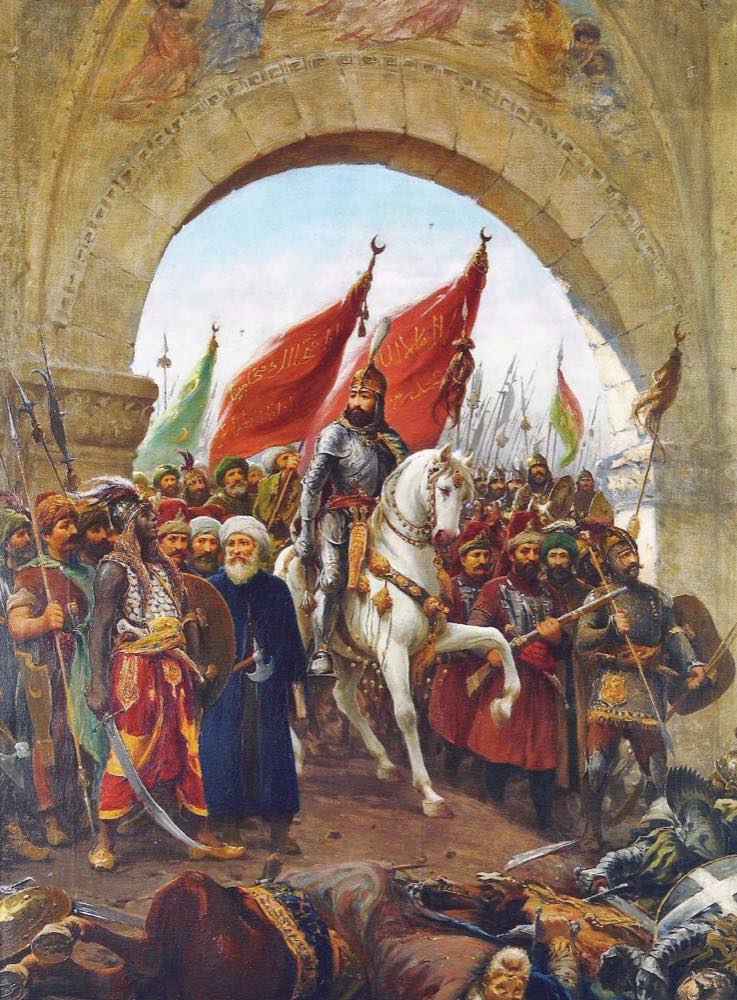
What happened
In spring 1453, Sultan Mehmed II besieged Constantinople with a large Ottoman army, artillery, and fleet against perhaps 7,000-10,000 organized defenders. Massive bombards battered the Theodosian Walls, and Ottoman ships were hauled overland into the Golden Horn to bypass the great harbor chain. After a 53-day siege, the Ottomans launched the final assault on May 29. Emperor Constantine XI died during the fighting and the city fell, ending the Byzantine Empire. Hagia Sophia was converted into a mosque and Constantinople became the Ottoman capital. The conquest demonstrated the growing importance of gunpowder artillery, but it did not make fortified walls obsolete overnight.
Going Deeper
The fall of Constantinople generated instant and durable mythology on both sides: the last emperor's death fighting at the walls is reported but unverified, and the legend of the marble emperor sleeping until his return fed Greek irredentism into the twentieth century, while Ottoman tradition built its own edifice around the young sultan's destiny. The claim that refugee scholars sparked the Renaissance is now heavily qualified, since the migration and the manuscript flow both long predated 1453. The date's symbolism, 1453 as the end of the Middle Ages, is a historiographical convention scholars use while disclaiming it. Hagia Sophia's status - church, mosque, museum, mosque again in 2020 - keeps the conquest actively political five and a half centuries on.
Three new battles every day. Tap the globe where each one happened.
Play today's battles