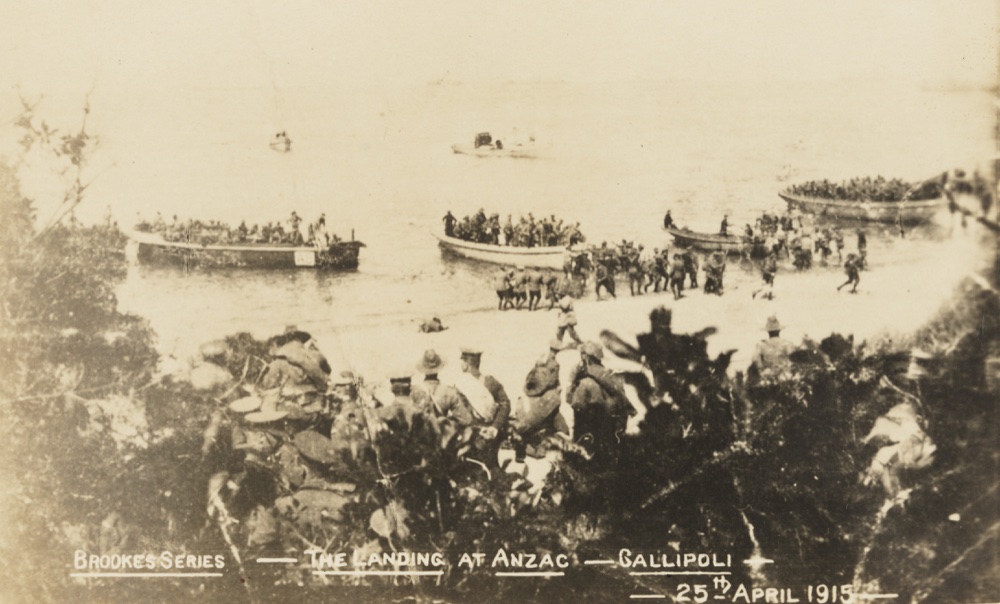
What happened
The Allied campaign against the Dardanelles began with naval operations and then amphibious landings on the Gallipoli peninsula on April 25, 1915. British, French, Australian, New Zealand, Indian, and other Allied troops established several beachheads but failed to break through Ottoman defenses on the ridges. Mustafa Kemal emerged as one of the campaign's key Ottoman commanders. After months of costly stalemate, the Allies evacuated Suvla and Anzac in December and the last troops from Helles in January 1916. Casualty estimates on each side approach a quarter-million when wounded and sick are included. April 25 became Anzac Day in Australia and New Zealand.
Going Deeper
Gallipoli is the rare campaign that founded three national mythologies at once: Anzac Day made the landing the birth-legend of Australia and New Zealand, while the successful defense made Mustafa Kemal - later Atatürk - and fed directly into Turkish national identity. Historians have complicated the Anzac framing by pointing out that British casualties far exceeded the Anzacs', and Indian, Newfoundland, and Senegalese troops fought too - facts the dominion legend long crowded out. Churchill's career nearly died with the campaign, and the strategic debate - visionary shortcut or doomed sideshow - never closed. The famous Atatürk 'Johnnies and Mehmets' words of reconciliation, carved at Anzac Cove, have disputed authorship, a controversy that itself shows how much the site's meaning is curated.
Three new battles every day. Tap the globe where each one happened.
Play today's battles