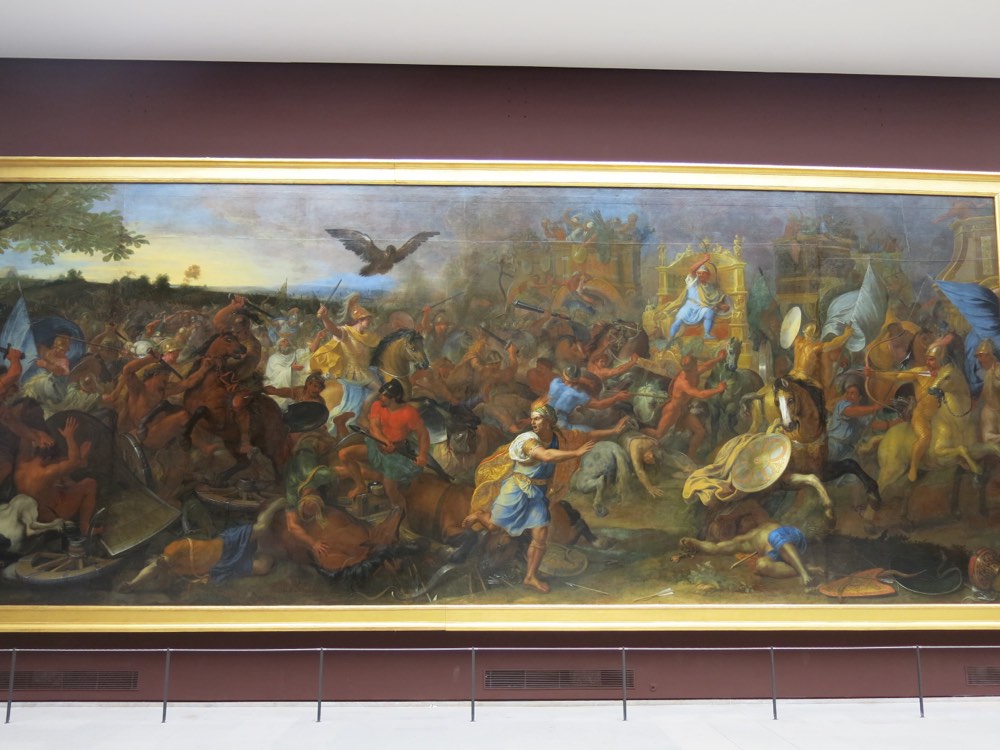
What happened
On October 1, 331 BC, Alexander the Great met Darius III on a broad plain in northern Mesopotamia chosen to favor Persian cavalry and scythed chariots. Alexander advanced obliquely, stretched the Persian formation, and then led the Companion cavalry through a gap toward Darius. The Persian king fled, and the army eventually collapsed. Gaugamela broke organized Achaemenid resistance at the imperial level and opened Babylon, Susa, and Persepolis to Alexander, although fighting continued afterward and Darius was killed by his own followers the next year.
Going Deeper
Gaugamela is one of very few ancient battles whose date is fixed by an independent document, a Babylonian astronomical diary written in cuneiform by temple scribes with no interest in Greek glory, which records the king's defeat and the abandonment of his army. The Persian side left no narrative at all, so the battle reaches us through writers drawing on Alexander's own officers, and the Persian troop totals they report, running from several hundred thousand to a million, are treated by modern historians as propaganda arithmetic rather than counting. The battlefield's location was argued over for two centuries before survey work around Tell Gomel near the Upper Zab began to settle it in the 2010s. Alexander's reputation is its own live dispute, heroic in the Western tradition and much closer to a catastrophe in Iranian memory, where the Achaemenid collapse reads as a civilization destroyed rather than one triumphing.
Three new battles every day. Tap the globe where each one happened.
Play today's battles