What happened
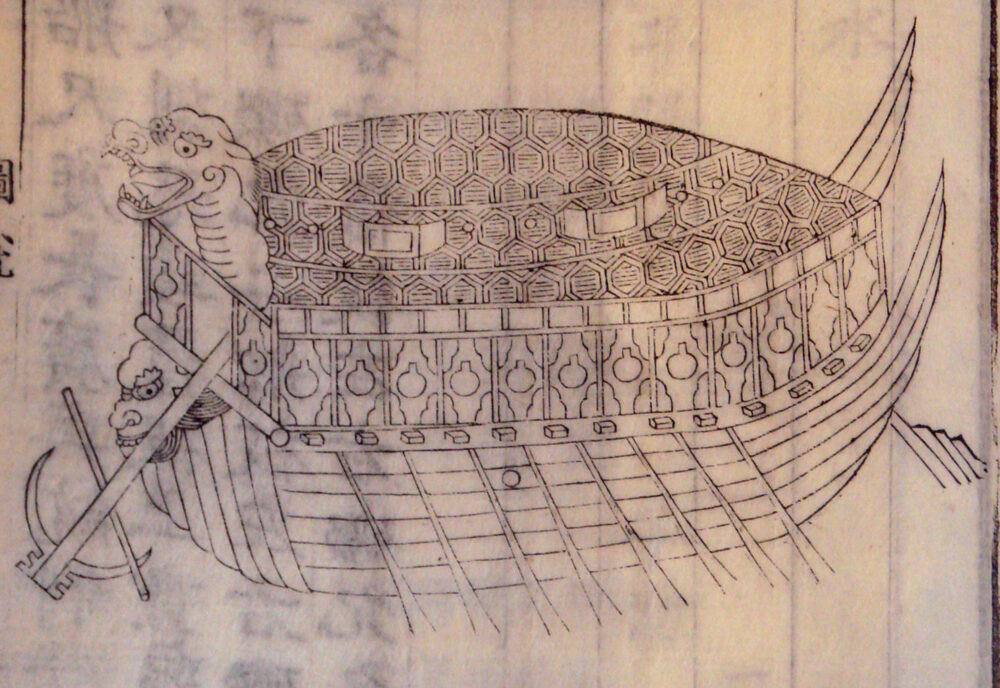
In August 1592, Admiral Yi Sun-sin lured a Japanese fleet out of a narrow strait into open water off Hansan Island and enveloped it with his 'crane wing' formation. Korean cannon fire destroyed or captured most of the Japanese ships while Yi's fleet suffered no ship losses. The victory crippled Japanese naval movement along Korea's south coast and endangered the seaborne supply line supporting the invasion of the peninsula. Yi fought with panokson warships and a small number of armored turtle ships, whose exact design details remain debated. He is remembered as one of history's greatest admirals, and Hansan is celebrated as his masterpiece.
Going Deeper
Hansan is where the turtle-ship argument lives, and it is sharper than the popular story suggests: no contemporary source describes iron plating on the roof, the claim that Korea built the world's first ironclad is a modern assertion, and Korean scholars debate it as well, with museum reconstructions reflecting guesswork as much as evidence. The war carries three names in three national historiographies, and the Japanese accounts, including one left by the defeated commander Wakizaka Yasuharu, are rarely read inside the Korean narrative even though they are among the few surviving records from the other side. Yi's modern reputation has an odd international strand, since officers of the Meiji navy studied and praised him, and the habit of comparing him to Nelson comes partly from that quarter rather than from Korea. Korean cinema keeps returning to him, with a 2022 film built specifically on this battle.
Three new battles every day. Tap the globe where each one happened.
Play today's battles