What happened
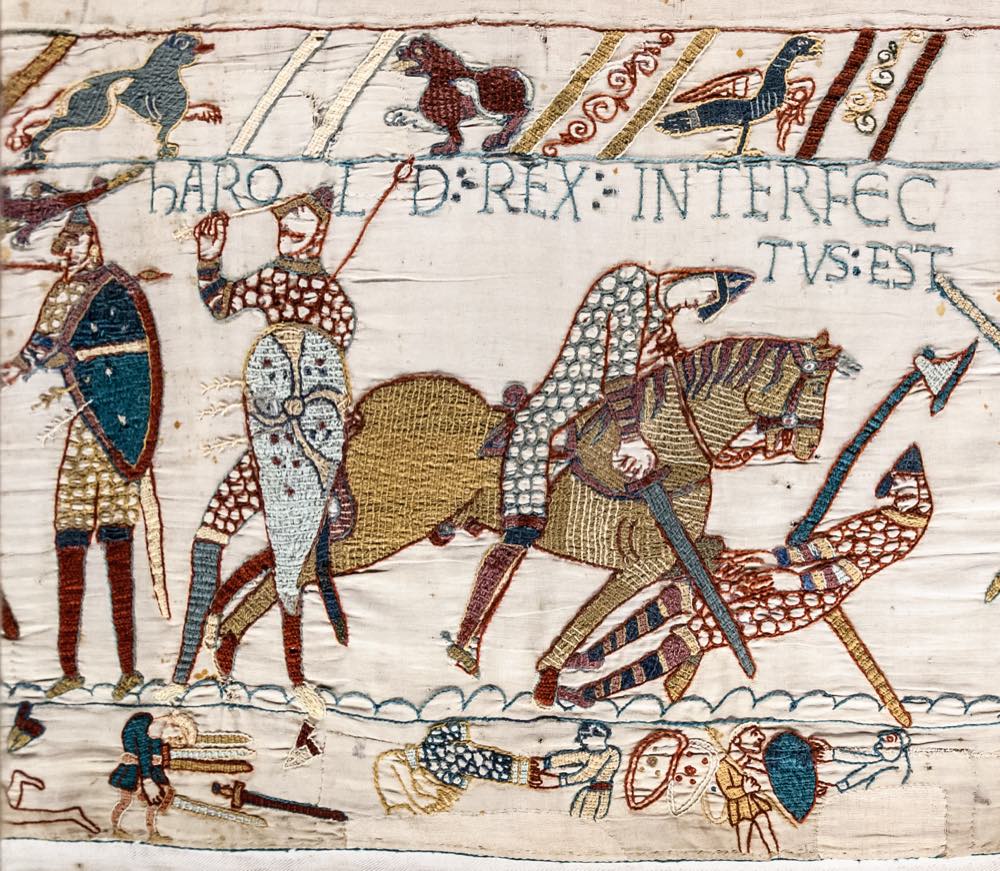
William of Normandy's invasion force met King Harold's English army on a hillside in Sussex, less than three weeks after Harold had defeated a Norwegian invasion at Stamford Bridge. The English shield wall held for much of the day before repeated Norman attacks, including retreats that may in part have been deliberate, pulled sections of the defense out of position. Harold was killed late in the battle; the famous arrow-in-the-eye version is a later and disputed interpretation of the evidence. William's victory opened the Norman Conquest, reshaping English landholding, government, elite culture, and (over generations) the English language.
Going Deeper
Nearly everything visual people 'know' about Hastings comes from the Bayeux Tapestry, an embroidery made within living memory of the battle but with an agenda - probably commissioned by William's half-brother - and its most famous detail, Harold's arrow in the eye, may be a nineteenth-century restoration or a misreading of the stitching. Chroniclers on both sides wrote decades apart with opposite loyalties, so the battle's length, the reality of the feigned Norman retreats, and Harold's exact death remain genuinely debated. Even the site has been challenged: the traditional field at Battle Abbey has thin archaeological support, and alternative locations have been seriously proposed, though the traditional site retains scholarly majority. The measuring stick of the aftermath is Domesday Book, compiled within twenty years - a survey so total that contemporaries compared it to the Last Judgment, and its pages record the old English aristocracy almost entirely dispossessed.
Three new battles every day. Tap the globe where each one happened.
Play today's battles