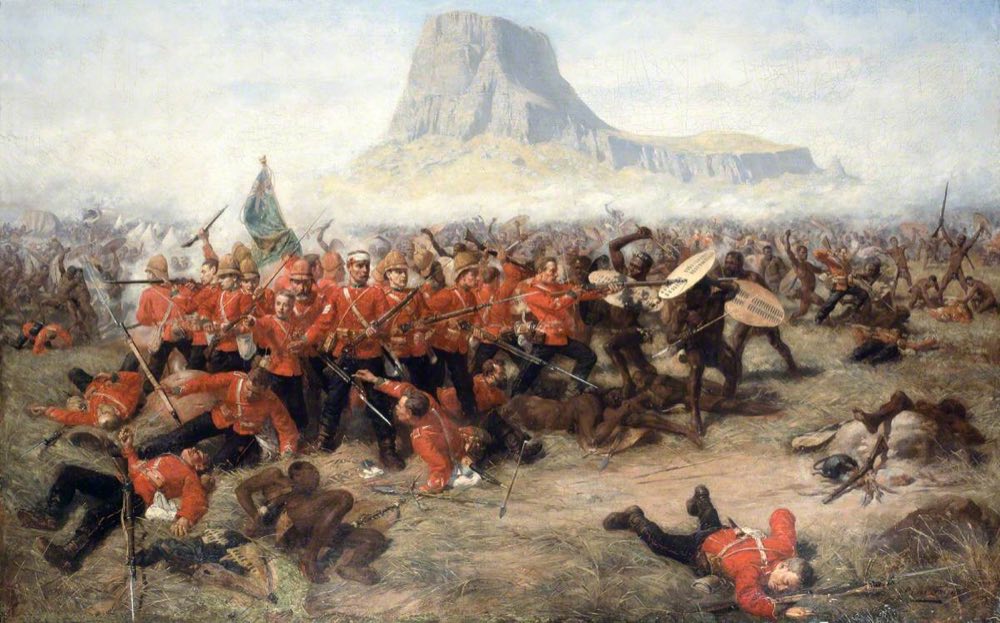
What happened
Eleven days after Britain invaded the Zulu kingdom in January 1879, a Zulu army of roughly 20,000 attacked the British camp beneath Isandlwana. Using the classic 'horns of the buffalo' deployment, the Zulus enveloped and overran the exposed camp, killing more than 1,300 British, colonial, and African troops. Zulu casualties are uncertain and probably substantially exceeded the often-quoted minimum of 1,000. The defeat was one of the British Empire's most dramatic reverses against an Indigenous army. Later the same day, a much smaller British garrison at Rorke's Drift repelled a separate Zulu attack, creating two enduring but very different memories of the war.
Going Deeper
Isandlwana forced a reckoning that ran from tactics to empire: the Victorian search for excuses - ammunition-box screws, failed resupply - has been largely dismantled by modern archaeology and analysis, which find the British simply overextended, badly deployed, and beaten by superior Zulu generalship, Ntshingwayo's disciplined approach march and the horns-of-the-buffalo envelopment executed at scale. The battle detonated in British politics, helped end the careers behind the unauthorized invasion, and required the manufactured heroism of Rorke's Drift as counter-programming - the pairing historians treat as a single memory operation. Zulu oral history, systematically collected only from the late twentieth century, restored the victors' voices and losses (the dead of Isandlwana were mourned in Zululand for a generation). The solar eclipse that darkened the field mid-battle gave both traditions an omen neither invented.
Three new battles every day. Tap the globe where each one happened.
Play today's battles