What happened
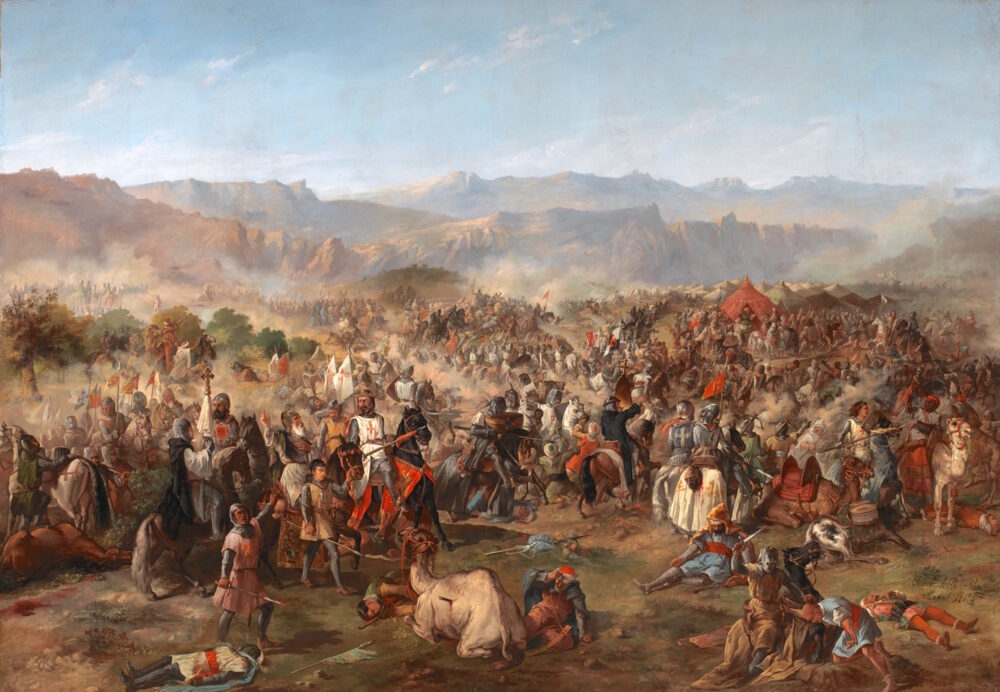
On July 16, 1212, the combined armies of Castile, Aragón, and Navarre, joined by military orders and crusaders, broke the army of the Almohad caliph al-Nasir in the passes of the Sierra Morena. A local guide was said to have led the Christian host through an unwatched defile to reach the battlefield: a story told in the chronicles, embellished or not. The allied attack shattered the Almohad line, and tradition holds that the king of Navarre's men cut through the chained slave guard around the caliph's tent, an image preserved on Navarre's coat of arms. The victory broke Almohad power in Iberia; within four decades Córdoba and Seville had fallen to Castile, leaving Granada as the last Muslim state on the peninsula.
Going Deeper
Las Navas sits at the center of a word historians now use carefully, since the Reconquista as a single centuries-long project is largely a nineteenth-century construction laid over a much messier history in which Christian and Muslim rulers routinely allied against their co-religionists. The Arabic accounts, far less read alongside the Latin ones, explain the Almohad collapse partly through internal politics and a caliph leaning on North African troops with little stake in Iberia. A great banner long said to have been taken from the field hangs at the monastery of Las Huelgas in Burgos, and studying it as a textile rather than reading it as a symbol has unsettled the story, since the documentary trail for its capture here is thin and some specialists date the weaving and its design later than the battle. The commemorative frame has proved durable and portable, invoked under Franco and again by European far-right movements that trade in the Reconquista frame more than in this battle by name, which is why Spanish medievalists increasingly write about the reception as well as the event.
Three new battles every day. Tap the globe where each one happened.
Play today's battles