What happened
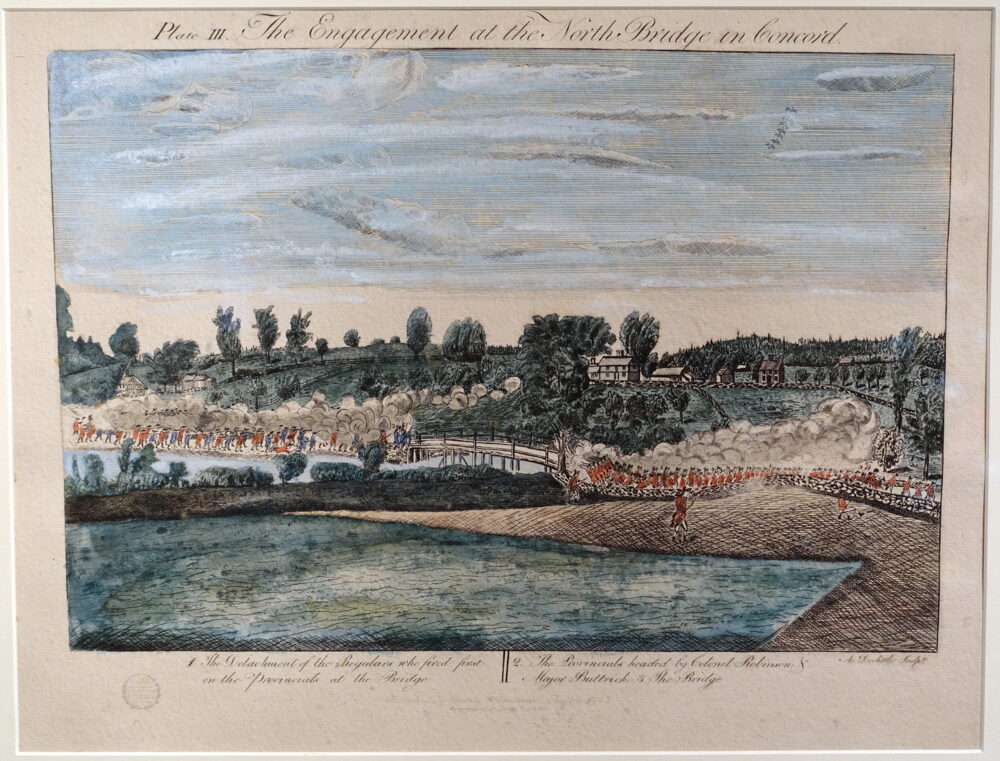
The American Revolutionary War began on April 19, 1775, when British regulars marched from Boston to seize colonial military supplies at Concord and met armed militia at Lexington and then at Concord's North Bridge. A first scattered exchange on Lexington Green killed eight colonists; at the bridge, militia returned fire in what Emerson later canonized as 'the shot heard round the world.' Who fired first at Lexington has never been established. As the British column retreated to Boston, thousands of militiamen firing from walls and woods turned the march into a running battle that cost the regulars some 273 casualties. By nightfall the countryside was in arms, and the siege of Boston had begun.
Going Deeper
Within days of the fighting the Massachusetts Provincial Congress took sworn depositions from dozens of participants and rushed them to England aboard a fast ship so that the colonial version would reach London before the army's, one of the earliest and most successful information operations in American history. The two towns then spent the next century arguing over which of them had begun the Revolution, a quarrel that pulled in historians and orators and was never settled so much as outlived. Longfellow's poem of 1861 did more than anything else to put Paul Revere at the center of the story, and did it by rearranging the night considerably, dropping the other riders and the detail that Revere was detained before reaching Concord, because the poem was written to steady a country on the edge of a different war. The line everyone quotes was composed for the dedication of a monument sixty years after the fact, which is roughly when the day began to be remembered in the shape it now has.
Three new battles every day. Tap the globe where each one happened.
Play today's battles