What happened
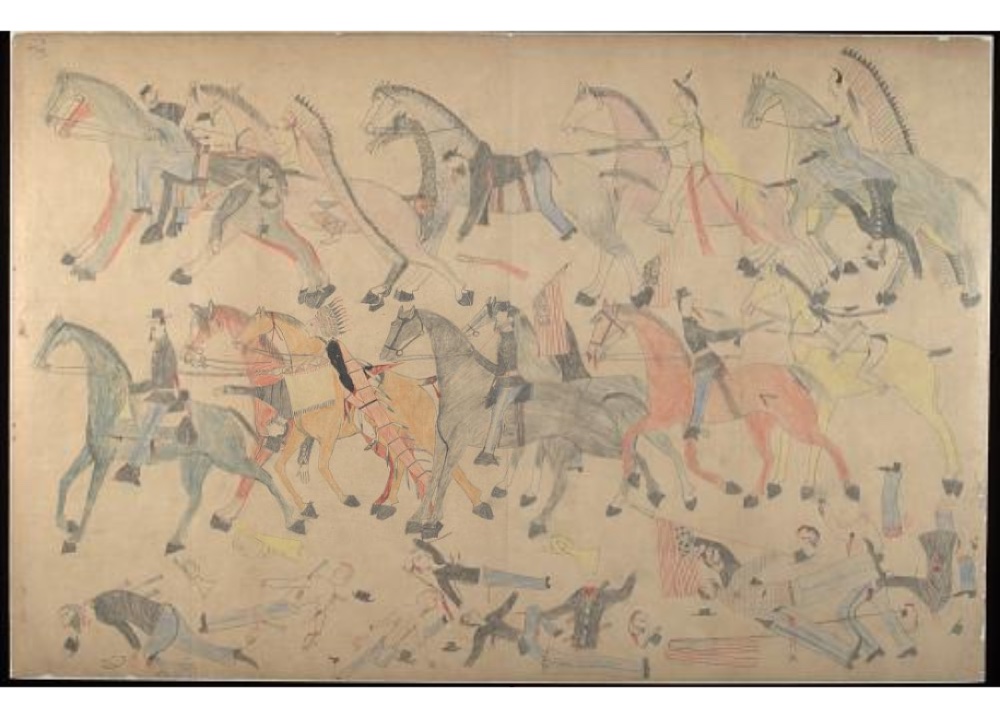
In June 1876, Lt. Col. George A. Custer's 7th Cavalry attacked a large Lakota, Northern Cheyenne, and Arapaho village along the Little Bighorn River. Custer divided his regiment into several battalions and his immediate command of roughly 210 men was overwhelmed and killed. Other elements under Marcus Reno and Frederick Benteen survived defensive fighting on nearby bluffs. Sitting Bull was an important spiritual and political leader, while battlefield leadership was distributed among many warriors and chiefs, including Crazy Horse. The U.S. defeat shocked the country but was followed by intensified military pressure that forced most of the resisting bands onto reservations or into exile.
Going Deeper
Little Bighorn is American history's most relitigated battle: Custer's decisions spawned a forensic literature - aided since the 1983 grassfire by systematic archaeology that mapped cartridge flows and overturned the ordered 'last stand' tableau in favor of collapse and flight - while Lakota and Cheyenne testimony, dismissed for a century, proved the more accurate record all along. The battle's memory is a política in miniature: the site was 'Custer Battlefield' until 1991, when Congress renamed it and commissioned an Indian Memorial, and the shift from Custer shrine to shared ground tracks the country's larger reassessment. The victory was strategically pyrrhic - it accelerated the army's crushing response and the seizure of the Black Hills, whose taking the Supreme Court later ruled uncompensated, a judgment the Sioux nations refuse to monetize by declining the award, now grown past a billion dollars, insisting on the land itself.
Three new battles every day. Tap the globe where each one happened.
Play today's battles