What happened
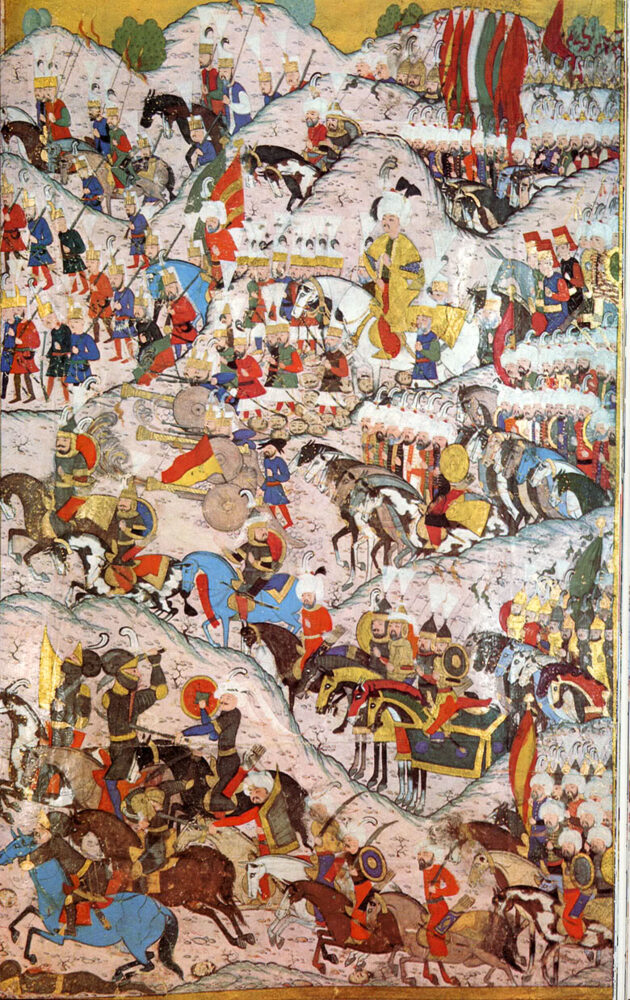
On August 29, 1526, Suleiman the Magnificent's army annihilated the Kingdom of Hungary's field army on the plain of Mohacs in roughly two hours. The Hungarian heavy cavalry's opening charge drove deep, then broke against entrenched Ottoman artillery and janissary volleys; the collapse killed most of the kingdom's leadership in an afternoon, and the young King Louis II drowned in a swollen stream during the flight. With no king and no army, Hungary fractured - within decades it was partitioned between the Ottomans, the Habsburgs, and a vassal Transylvania, a division lasting a century and a half. Mohacs entered the Hungarian language as the byword for national catastrophe; 'more was lost at Mohacs' remains a saying for keeping lesser troubles in proportion. Mass graves excavated at the site since the 1960s have given the disaster an unusually direct archaeological record.
Going Deeper
Mohacs sits at the center of Hungary's memory politics: the phrase 'Mohacs generation' and the battle's anniversary have been invoked by every era's politics, and historians distinguish sharply between the battle - a recoverable defeat - and the state failure around it, since factional paralysis had left Hungary without allies, without the Transylvanian army that never arrived, and arguably without a survivable strategy. Revisionist military history has upgraded the Hungarian army's quality and located the catastrophe in the decision to fight at all on that ground against a fresh Ottoman force with superior guns. Recent decades transformed the evidence base: systematic archaeology at the Satorhely mass graves recovered hundreds of the fallen, making Mohacs one of Europe's best-excavated early modern battlefields. Debate even touches the king's death - drowning in armor per the standard account, with period rumors of murder never quite extinguished.
Three new battles every day. Tap the globe where each one happened.
Play today's battles