What happened
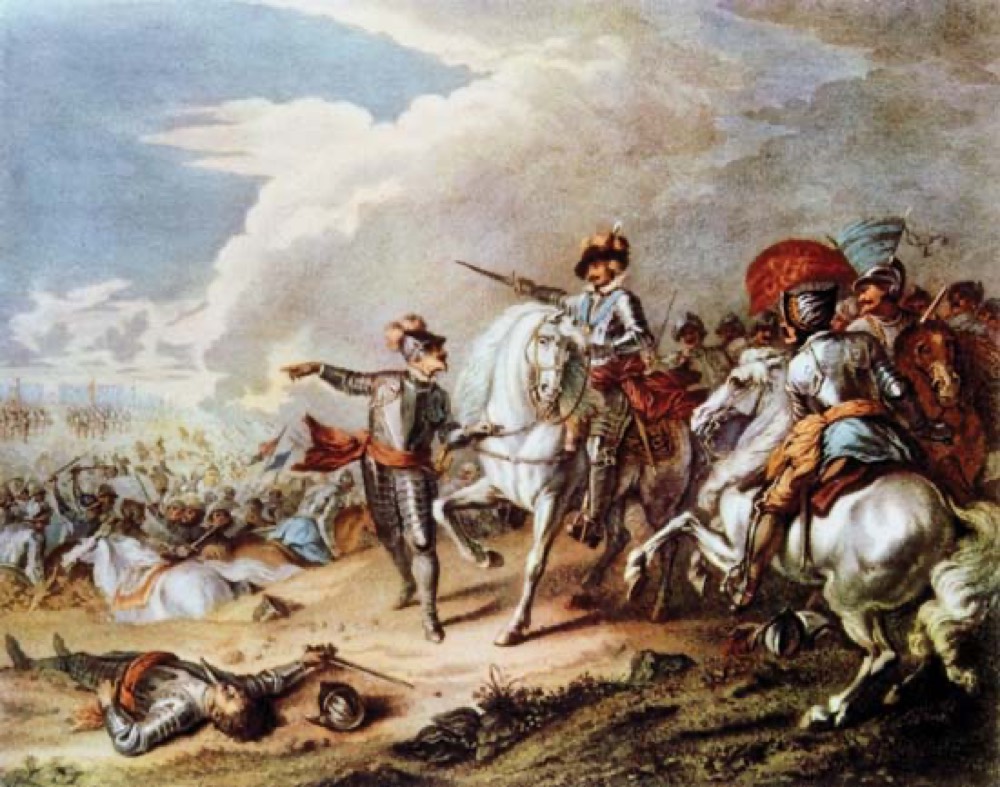
Naseby was the first full test of the New Model Army, a single standing professional force raised alongside an ordinance that stripped members of both Houses of Parliament of their commands, and it destroyed the king's field army in an afternoon. Rupert's cavalry broke the wing in front of it and rode on to the enemy baggage train, where the guard drove them off and the battle moved on without them; Cromwell broke the other flank, kept much of his horse in hand, and turned his reserves onto the royalist infantry. The king's infantry, outnumbered and now surrounded, surrendered in thousands. Parliamentarian troops fell on the royalist camp followers afterward and killed or mutilated around a hundred women, apparently taking them for Irish. Charles I never put another army in the field, and the letters captured with his baggage did the rest of the damage.
Going Deeper
The captured correspondence was published within weeks as The King's Cabinet Opened, showing Charles negotiating for Irish Catholic and continental troops while telling Parliament otherwise, and it stands as an early landmark in the political use of an opponent's private papers. The killing of the women at the baggage train has become a test case in how atrocity is recorded and explained, since contemporary justifications rest on identifying them as Irish, which the evidence does not support and which historians read as a licence constructed after the fact. Metal-detector surveys of shot scatter since the 1990s have moved the understanding of where the fighting actually ran, some distance from the traditional monument, and the site has been fought over again in planning disputes about roads and development. Cromwell's own reputation has swung about as far as any in English history, which colors most popular accounts of the day.
Three new battles every day. Tap the globe where each one happened.
Play today's battles