What happened
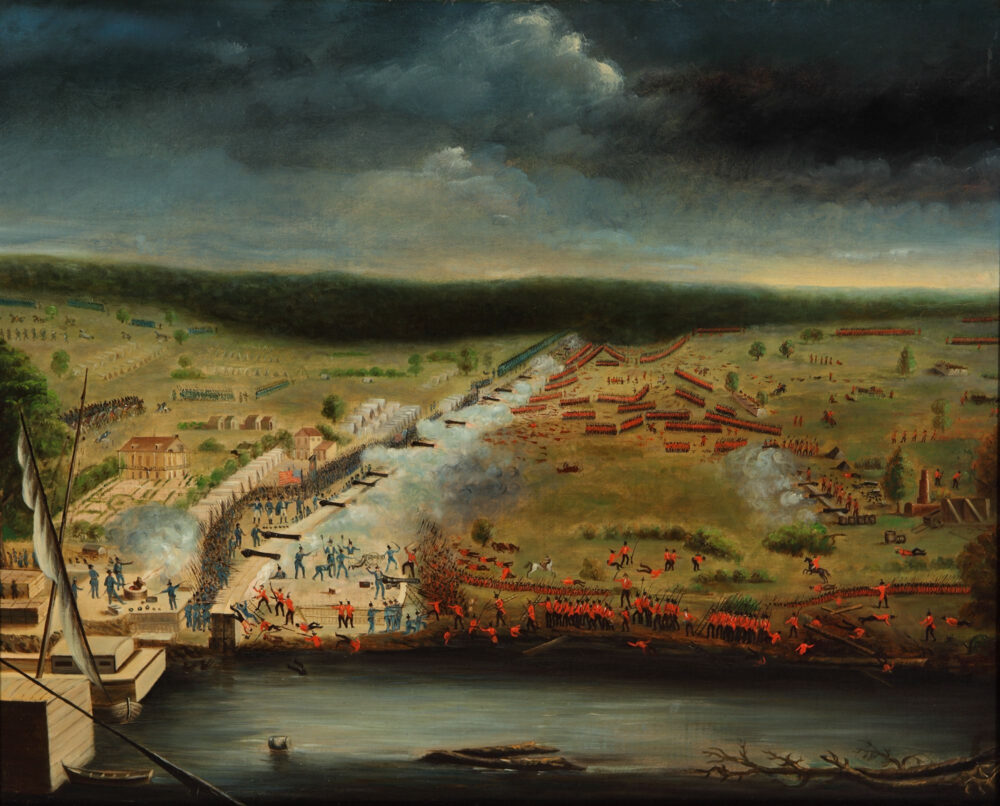
On January 8, 1815, a British army of Napoleonic War veterans assaulted Andrew Jackson's fortified line at Chalmette, below New Orleans, and was shattered in about half an hour. Jackson's force was famously improvised (regulars, militia, free men of color, Choctaws, sailors, and Jean Lafitte's Baratarian privateers), firing artillery and rifles from behind a rampart fronted by a canal. British casualties exceeded 2,000, including the army commander General Pakenham, against a few dozen American losses. The battle was fought after the Treaty of Ghent had been signed in Europe, but before ratification: the war was not yet legally over, and the treaty's news had simply not arrived. The lopsided victory made Jackson a national hero and became foundational American legend.
Going Deeper
The battle made Jackson a president, and the parts of it that did not suit that career were quietly dropped: he had placed the city under martial law, jailed a judge who challenged him, and was fined for contempt afterward, a fine Congress refunded with interest nearly thirty years later. The free men of color who fought in their own battalions were promised the same pay and bounty as white soldiers, were praised in Jackson's general orders, and then pursued the unkept promises for decades, individually, while being written out of the anniversary celebrations. Those anniversaries were substantial: January 8 was a federal holiday for more than thirty years, which is difficult to imagine now. The ground is a national park today, and the interpretation there has shifted considerably toward the people the older commemorations left out.
Three new battles every day. Tap the globe where each one happened.
Play today's battles