What happened
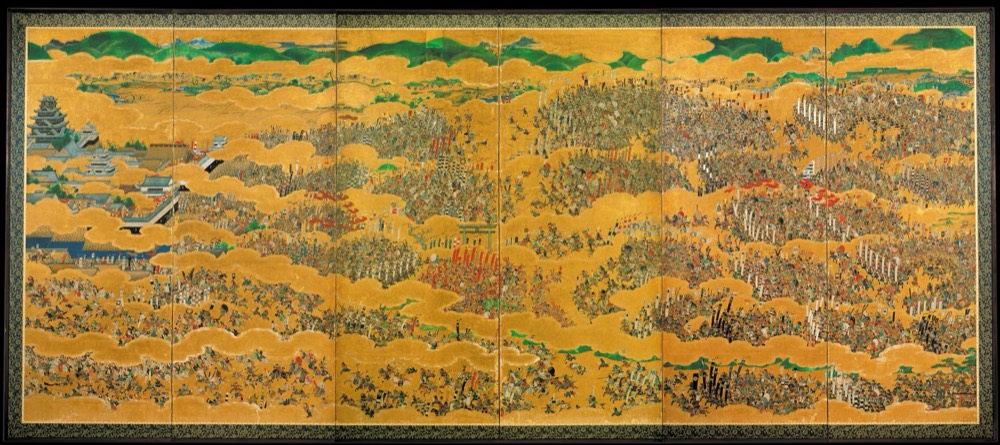
Tokugawa Ieyasu had ruled Japan for a decade, but the son of the man he replaced still held Osaka Castle, and in 1614 he went to remove him. The winter siege ended in a negotiated peace whose terms allowed the Tokugawa to fill in the outer moats, and when fighting resumed the following summer the greatest fortress in Japan had lost the works that made it great. The decisive battle was fought outside the walls on June 3, 1615, where Sanada Nobushige drove a charge close enough to Ieyasu's position to become the most celebrated attack in Japanese military legend before being killed. The castle burned that night, the Toyotomi heir and his mother died in the ruins, and the line was extinguished. What followed was two and a half centuries without a major war in Japan.
Going Deeper
Sanada Nobushige, better known by the name Yukimura that later writers gave him, is the clearest example of how Edo-period publishing manufactured heroes: he became the hero of popular fiction under a government that had killed him, on the safe grounds that loyalty to a lost cause was admirable in the abstract, and he now anchors an entire branch of Japanese games and television. The moat-filling has its own literature, argued over as either a deliberate trick or a defensible reading of terms the Toyotomi side accepted too quickly. The castle standing today is a 1931 concrete reconstruction on a base rebuilt after 1620, and excavation has uncovered the buried Toyotomi-era stonework beneath it, parts of which are now being opened to visitors, so the site is literally two castles stacked. Ieyasu's reputation has swung with each Japanese regime that needed a founder or a villain.
Three new battles every day. Tap the globe where each one happened.
Play today's battles