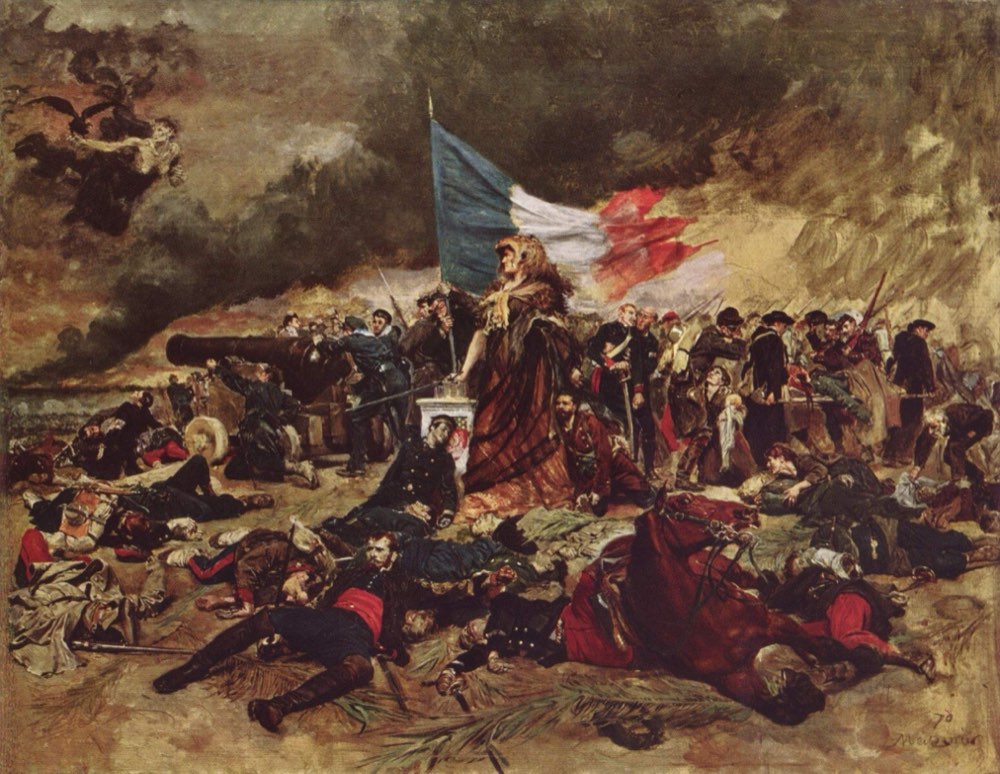
What happened
Seventeen days after the emperor's capture at Sedan, the German armies closed a ring around Paris and waited for it to starve. The republic proclaimed in September refused to surrender, so the city spent the winter eating its horses, then its dogs and cats, and finally the zoo, while balloons carried mail and officials out over the siege lines and pigeons brought microfilmed dispatches back in. Bismarck pressed for bombardment against Moltke's reluctance, and shells fell on the southern districts through January. The city capitulated on January 28, 1871, ten days after Wilhelm I was proclaimed German Emperor in the Hall of Mirrors at Versailles. Two months later Paris rose against the government that had signed the peace, and the Commune began.
Going Deeper
The siege produced the first sustained airmail service in history, with more than sixty balloons flown out carrying letters and a few passengers, and an ingenious answer to the problem of getting replies in: dispatches were photographically reduced onto collodion film light enough for a pigeon to carry thousands of messages at once, a technique that anticipated microfilm by decades. The famine menus, including the two zoo elephants, have been retold so often that food historians now spend as much time on which dishes were genuinely served as on the hunger itself, which fell hardest on the poor while restaurants kept serving the rich. German command was split over shelling a capital full of civilians, an argument that reads as an early version of a debate the next century held repeatedly. The siege runs straight into the Commune and into the memory politics that followed, which is why French accounts of the winter have never been neutral.
Three new battles every day. Tap the globe where each one happened.
Play today's battles