What happened
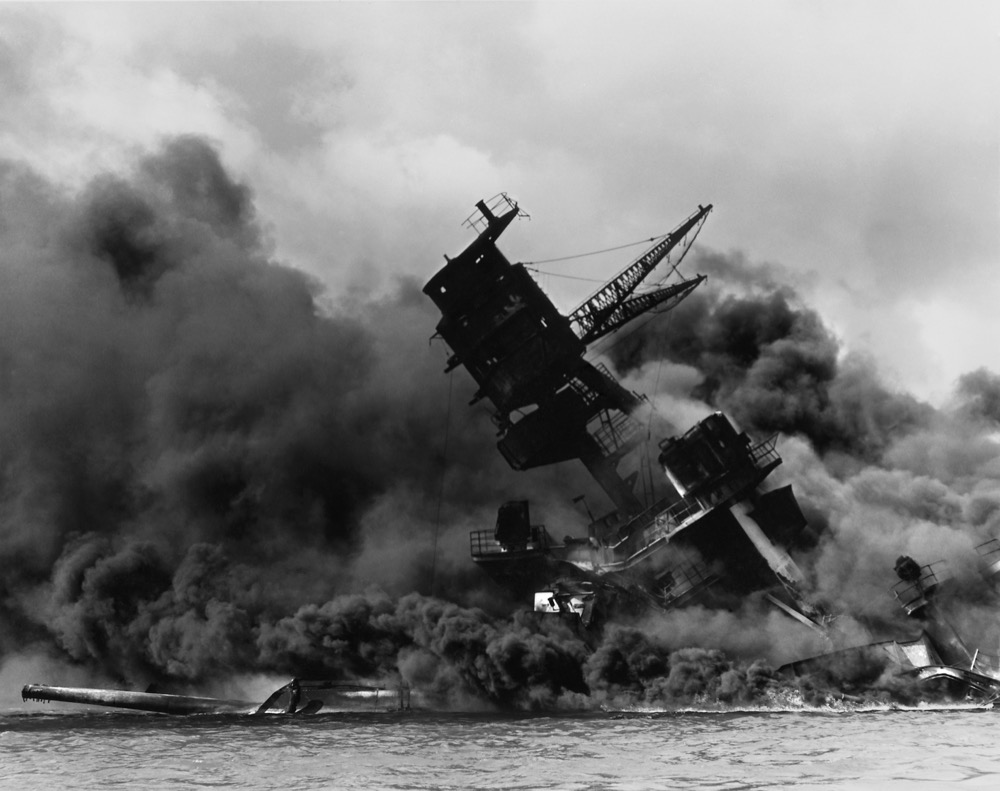
On the morning of December 7, 1941, 353 Japanese carrier aircraft attacked U.S. military installations on Oahu, with Pearl Harbor and the Pacific Fleet as the principal targets. In less than two hours, 2,403 Americans were killed, 21 U.S. ships were sunk or damaged, and 188 U.S. aircraft were destroyed. USS Arizona exploded with 1,177 crewmen killed. The attack was tactically devastating but failed to catch the U.S. aircraft carriers, which were away from the harbor. The United States declared war on Japan the next day, and Roosevelt's 'date which will live in infamy' address became one of the defining speeches of the war.
Going Deeper
Pearl Harbor spawned one of American history's most durable conspiracy debates - whether Roosevelt knew - which nine wartime and immediate-postwar inquiries and decades of scholarship have answered in the negative while documenting genuine, catastrophic failures of intelligence distribution and imagination. Historians now frame the attack as a strategic blunder wrapped in tactical brilliance: the carriers were absent, the fuel farms and repair yards were left untouched, and the 'infamy' framing unified an isolationist nation overnight, the opposite of Japan's intent. Yamamoto's famous 'sleeping giant' line appears in no contemporary document and was popularized by a film. The Arizona still leaks oil into the harbor - 'black tears' - and survivor interments in the wreck continued into the 2020s, making it that rare battlefield that is also an active grave.
Three new battles every day. Tap the globe where each one happened.
Play today's battles