What happened
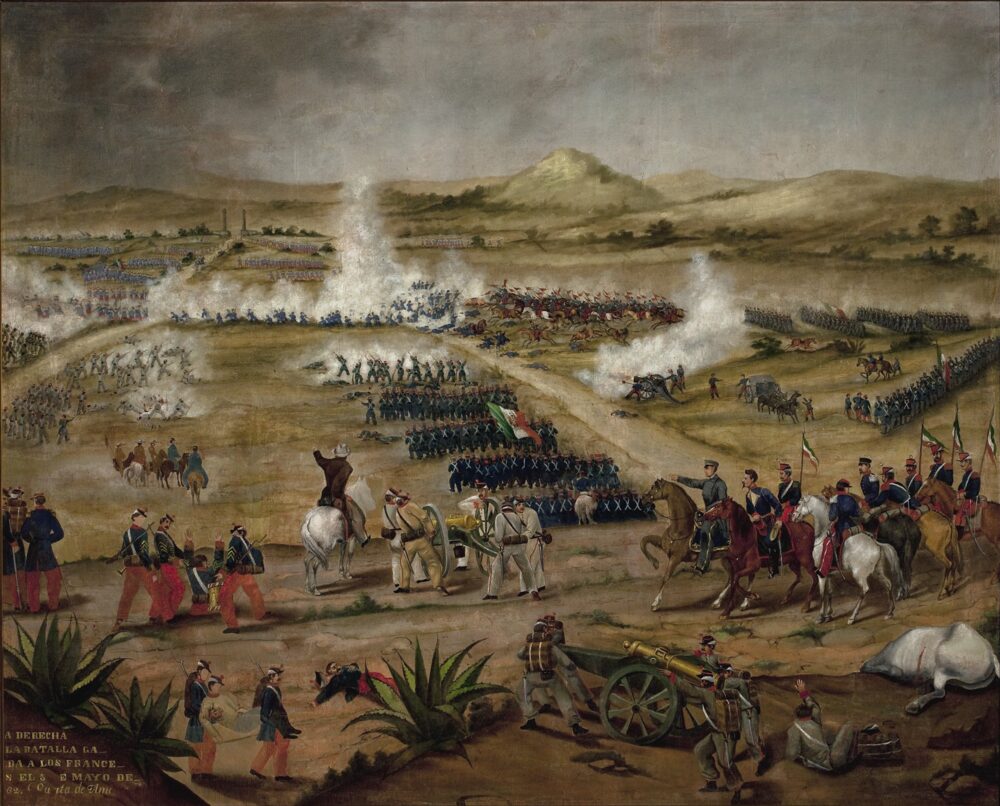
On May 5, 1862, General Ignacio Zaragoza's Mexican army repelled repeated French assaults on the fortified hills of Loreto and Guadalupe outside Puebla. The French force (part of Napoleon III's intervention to install a client empire in Mexico) was considered among the finest armies in the world, which made its defeat by a smaller, poorly equipped Mexican force a sensation. The victory was not decisive in the war: the French returned in greater strength, took Puebla the following year, and occupied Mexico City until the empire collapsed in 1867. But Cinco de Mayo became an enduring symbol of Mexican resistance, celebrated today far beyond the battlefield that produced it.
Going Deeper
Cinco de Mayo is the rare battle anniversary that grew larger abroad than at home, observed in Mexico mainly in Puebla and in the army, and built up in the United States first by Mexican-American communities during the nineteenth century, then by Chicano activists who made it a civil rights occasion in the 1960s and seventies, and then very thoroughly by beer and spirits marketing from the 1980s onward. The confusion with independence day, which falls in September, is now a standard annual correction. The intervention it belongs to was entangled with the American Civil War, since Napoleon III moved while Washington was occupied and the Confederacy hoped for a friendly monarchy on its southern border, which is why some historians treat the two wars as one continental story. Zaragoza himself was born in Texas when it was Mexican, a detail that sits oddly with how the day is now celebrated on both sides of the border.
Three new battles every day. Tap the globe where each one happened.
Play today's battles