What happened
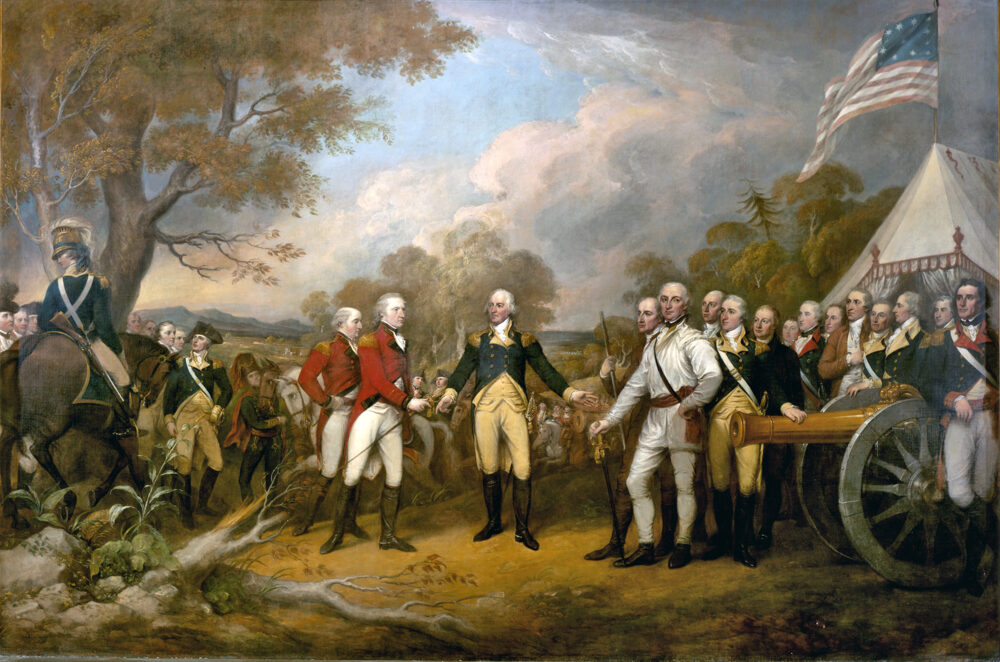
In the autumn of 1777, a British army invading from Canada was fought to a standstill and then surrounded at Saratoga, in the victory that transformed the American Revolution. General Burgoyne's plan to cut off New England down the Hudson corridor starved and stalled in the wilderness; two battles at Freeman's Farm and Bemis Heights - the second driven by Benedict Arnold's insubordinate battlefield leadership - broke the army's offensive power, and on October 17 some 5,800 British and German troops laid down their arms. The surrender convinced France to enter the war openly as an American ally, bringing the fleet and money that made Yorktown possible four years later. Arnold's leg, shattered in the assault, got a monument at Saratoga that pointedly omits his name - erected after his treason, honoring the limb that fought and not the man who turned.
Going Deeper
Saratoga's headline - 'turning point of the Revolution' - holds up better than most such labels, but historians locate the turn in Paris as much as New York: French intervention was the campaign's real product, and Vergennes had been waiting for proof the Americans could destroy a British army. The credit fight started immediately and never ended - Gates claimed the victory, Arnold's partisans claimed the fighting, and modern scholarship generally sides with the battlefield over the headquarters. The campaign is also taught as a logistics parable: Burgoyne's army dragged a baggage train through wilderness at a crawl while militia swarmed onto his flanks - a turnout traditionally credited to outrage over the Jane McCrea killing, though muster-roll research complicates how direct that effect was. The 'Convention Army' that surrendered was promised passage home, a promise Congress broke; its men spent years marched between internment camps.
Three new battles every day. Tap the globe where each one happened.
Play today's battles