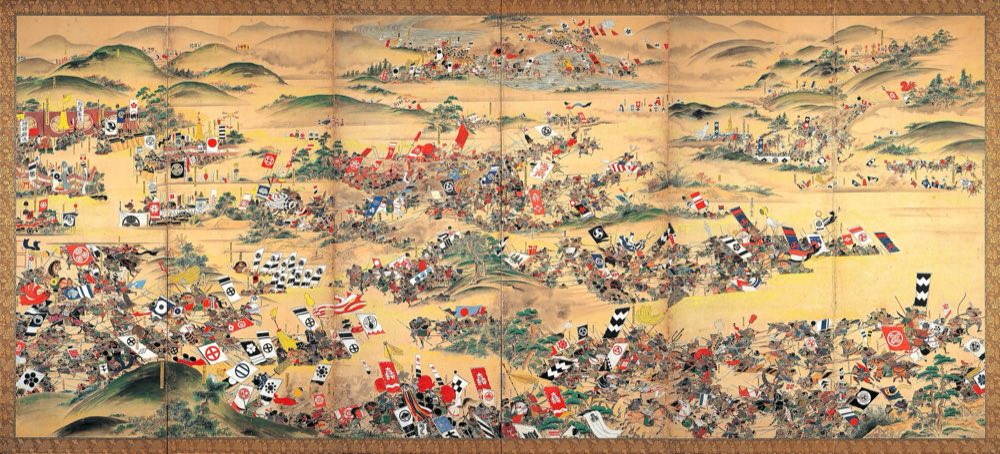
What happened
The struggle over Japan after Toyotomi Hideyoshi's death culminated at Sekigahara on October 21, 1600. Tokugawa Ieyasu's Eastern Army faced a Western coalition led politically by Ishida Mitsunari. During the battle, Kobayakawa Hideaki and other contingents defected or shifted allegiance, helping collapse the Western position. Casualty totals are highly uncertain and later chronicles give widely varying numbers, so estimates such as 30,000 dead should not be treated as firm. In 1603 Ieyasu became shogun, founding the Tokugawa shogunate that dominated Japan for more than two and a half centuries.
Going Deeper
Sekigahara's neat narrative is largely an Edo-period construction written under Tokugawa patronage, and recent scholarship has been dismantling it: army sizes, the weather-shrouded opening, and even the fight's duration are far less certain than the classic accounts present, and some revisionists argue it was shorter and more lopsided than the legend allows. The tradition that Ieyasu fired on Kobayakawa Hideaki's position to force his hand is doubted by modern scholars, and the timing of the defection is itself disputed. What is not in doubt is the settlement afterward: the wholesale redistribution of domains built the political architecture the shogunate rested on, and it did so by creating enemies it never absorbed. Satsuma and Choshu, punished at Sekigahara, led the revolution that ended the shogunate 268 years later, a long-cycle revenge Japanese historians love to trace.
Three new battles every day. Tap the globe where each one happened.
Play today's battles