What happened
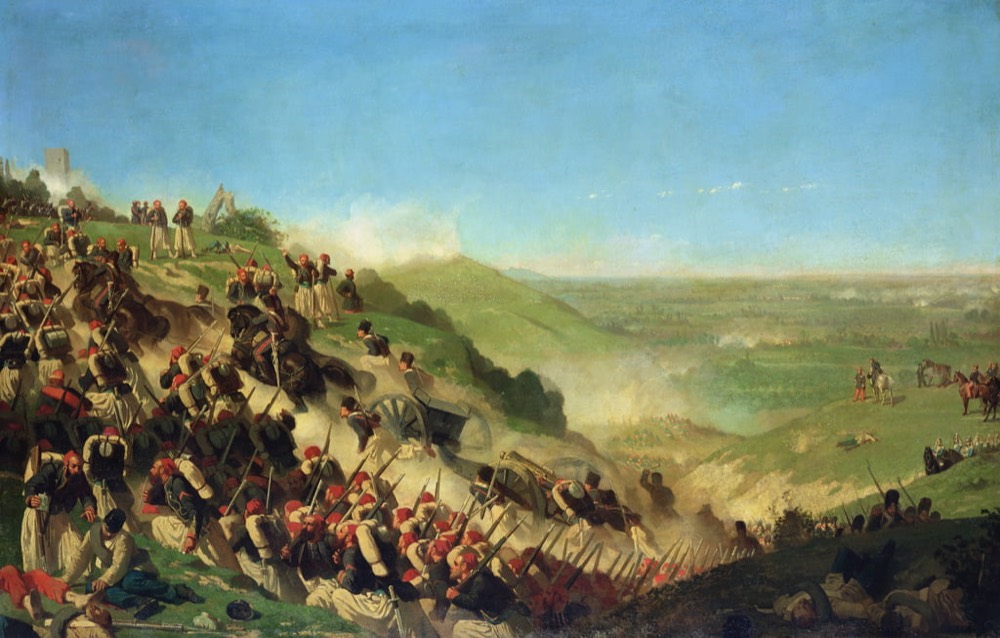
Two emperors commanded in person at Solferino, and neither could see much of what was happening across fifteen kilometers of hills. The armies had blundered into each other and fought all day in heat, and by evening the Austrians had pulled back across the Mincio, leaving a field covered with dead and with wounded nobody had the means to collect. A Swiss businessman named Henry Dunant, who had come to the area hoping to petition Napoleon III about a land concession in Algeria, spent the following days organizing villagers to carry water and dress wounds in the church at Castiglione. He went home and wrote a book about it. Within four years it had produced the International Committee of the Red Cross, and within five the first Geneva Convention.
Going Deeper
A Memory of Solferino is one of the few books that can be shown to have created an institution, and Dunant's own life afterward went badly: he was bankrupted, pushed out of the committee he had founded, and lived in obscurity until a journalist rediscovered him, after which he shared the first Nobel Peace Prize in 1901. Historians of humanitarianism argue about how much to credit the book against longer currents, noting military medical reform already underway and Florence Nightingale's skepticism that volunteer societies would let governments off the hook for caring for their own wounded, an objection that has never entirely gone away. The battle is also a fixed point in the Risorgimento's contested memory, since the war that it decided ended in an armistice Italy's nationalists regarded as a betrayal. The ossuary chapel at Solferino, with the bones of thousands stacked and visible, was built in a spirit closer to the nineteenth century's than to ours.
Three new battles every day. Tap the globe where each one happened.
Play today's battles