What happened
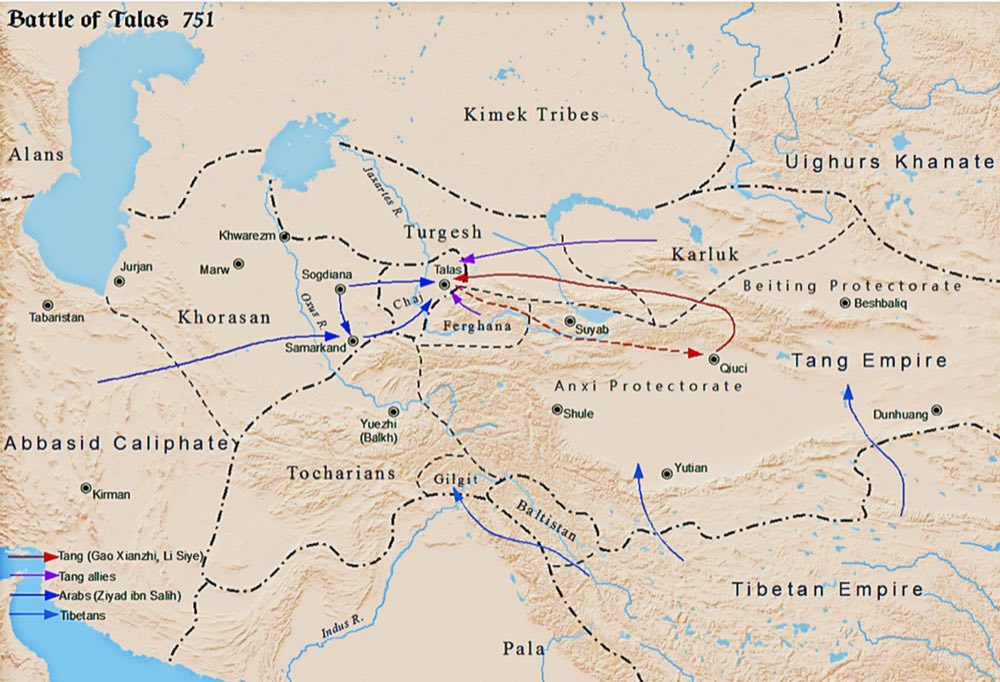
In 751, Tang forces and an Abbasid-led army met somewhere in the Talas River region of Central Asia. The Tang position collapsed after Karluk troops switched sides during the fighting. The defeat checked Tang power in the region, although the An Lushan rebellion that erupted a few years later was a much larger reason China withdrew from sustained western expansion. Later tradition connected Chinese prisoners from Talas with the spread of papermaking to Samarkand and the Islamic world, but historians debate how direct that link really was.
Going Deeper
Talas has no battlefield: the site along the valley has never been archaeologically located, and reconstructions of the fighting rest on brief notices in Chinese sources and much later Islamic ones. The reported turning point - the Karluk Turks defecting against the Tang mid-battle - is a reminder that steppe politics, not just armies, decided Central Asia. In modern times the battle acquired a second life as a set-piece in civilizational-clash narratives, an 'Islam versus China' framing scholars caution against, since both empires relied on Turkic allies, fought over local client states, and traded busily before and after. That retrospective inflation - a frontier battle carrying world-historical symbolism assigned centuries later - is itself what historians of memory now study about Talas.
Three new battles every day. Tap the globe where each one happened.
Play today's battles