What happened
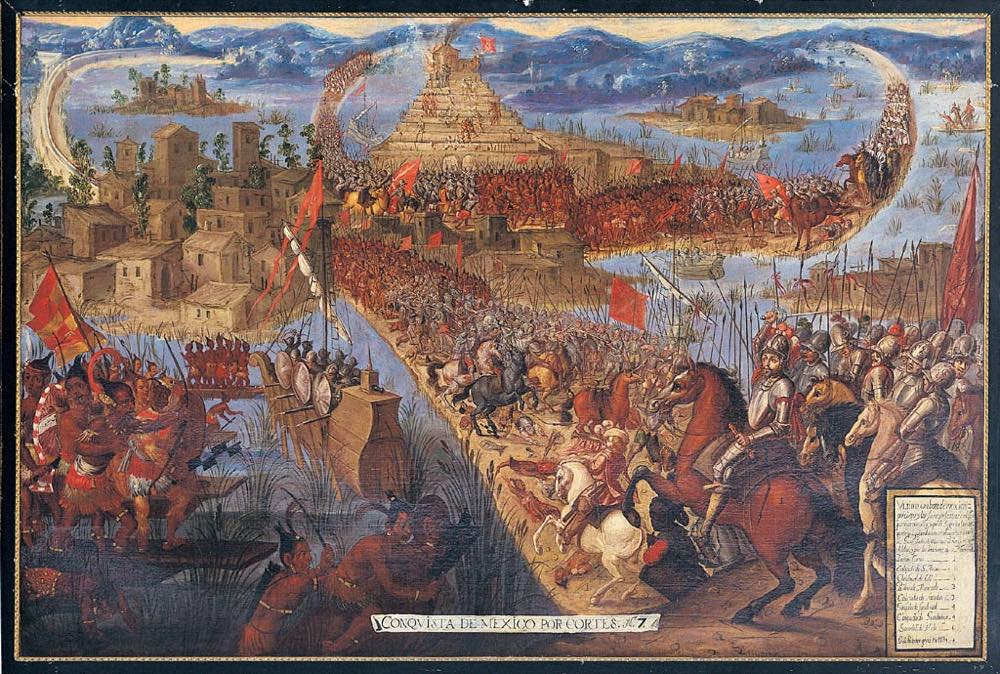
The 1521 siege of Tenochtitlan was won not by a small Spanish force alone but by Hernan Cortes's expedition together with tens of thousands of Indigenous allies, especially Tlaxcalans and other enemies of Mexica rule. Smallpox had devastated the city before the siege, killing many inhabitants and the ruler Cuitlahuac. Spanish-built brigantines helped control Lake Texcoco while allied armies attacked along the causeways and progressively cut food and water supplies. After roughly three months of fighting, Cuauhtemoc was captured on August 13 and organized resistance collapsed. The destroyed capital became the core of colonial Mexico City.
Going Deeper
The siege is now read as much from Nahua sources as Spanish ones, above all the Florentine Codex and the annals compiled within a few decades of the fall, which preserve the defenders' account of the famine and the house-by-house demolition, and which historians set beside Cortes's letters for what those are, legal self-justifications addressed to a crown that could have ruined him. The consequence has been the quiet retirement of the conquistador-genius narrative in the scholarship, though it survives almost intact in popular telling. Memory here is state politics: Mexico marked the 2021 quincentennial as indigenous resistance and had already asked Spain for an apology in 2019, and the vocabulary is contested too, with conquest and invasion carrying different arguments. Excavation keeps the older city physically present, the Templo Mayor since the 1970s and the tzompantli skull rack since 2015, pulling the Mexica capital back up through the modern one.
Three new battles every day. Tap the globe where each one happened.
Play today's battles