What happened
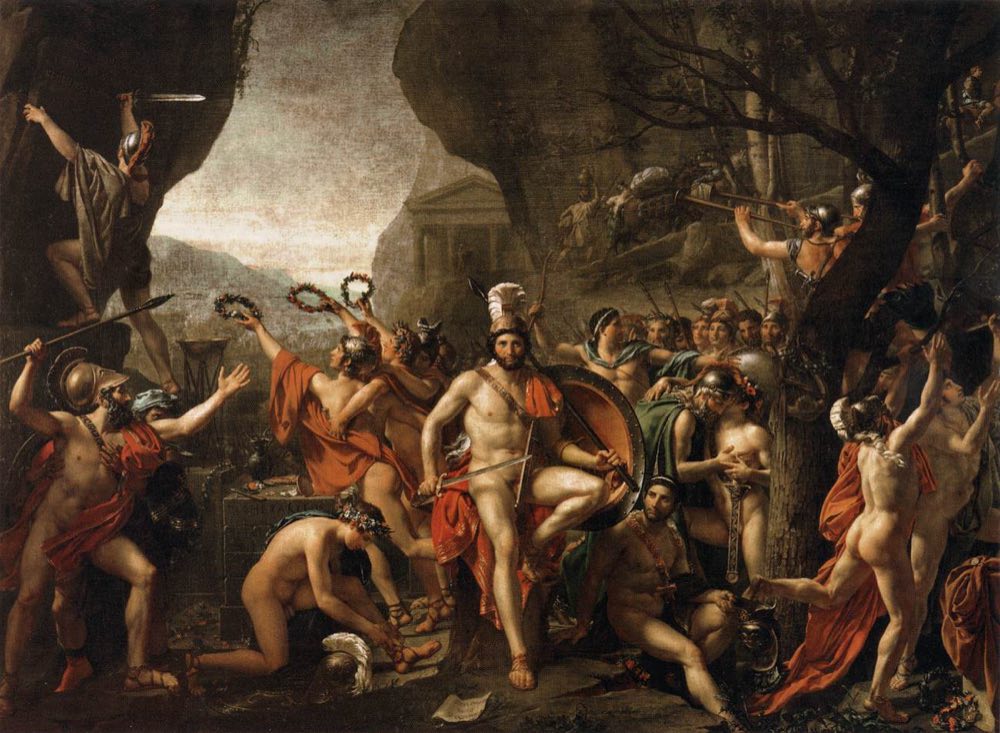
A Greek coalition under Sparta's King Leonidas defended the narrow pass at Thermopylae against Xerxes' much larger Persian invasion army. After two days of failed Persian assaults, a local guide revealed a mountain path that allowed Persian troops to turn the position. Leonidas dismissed much of the coalition and remained with the 300 Spartans, Thespians, Thebans, and other rearguard troops for a final stand. The defeat did not stop the invasion, but it became an enduring symbol of resistance; the Greek coalition later won decisive victories at Salamis and Plataea. The ancient shoreline has since moved outward, so the pass is much wider today.
Going Deeper
Thermopylae is the ancient world's premier case of memory outrunning event: a defeat, deliberately reframed within a generation as the moral victory that defined Greek freedom against Persian despotism - a framing Herodotus built and every retelling since has inherited. The famous 300 were only ever part of a Greek force in the thousands, including the Thespians and Thebans who died in the last stand and were largely written out of the legend. Modern scholarship also complicates the sides: Persia's empire was multiethnic and administratively sophisticated, not the faceless horde of the Spartan myth, and Sparta itself was a slave society whose 'freedom' rhetoric had sharp limits. What endures best is two lines of verse - Simonides' epitaph for the dead, 'Go, tell the Spartans' - quoted at war memorials for twenty-five centuries and arguably doing more than any army to keep the battle alive.
Three new battles every day. Tap the globe where each one happened.
Play today's battles