What happened
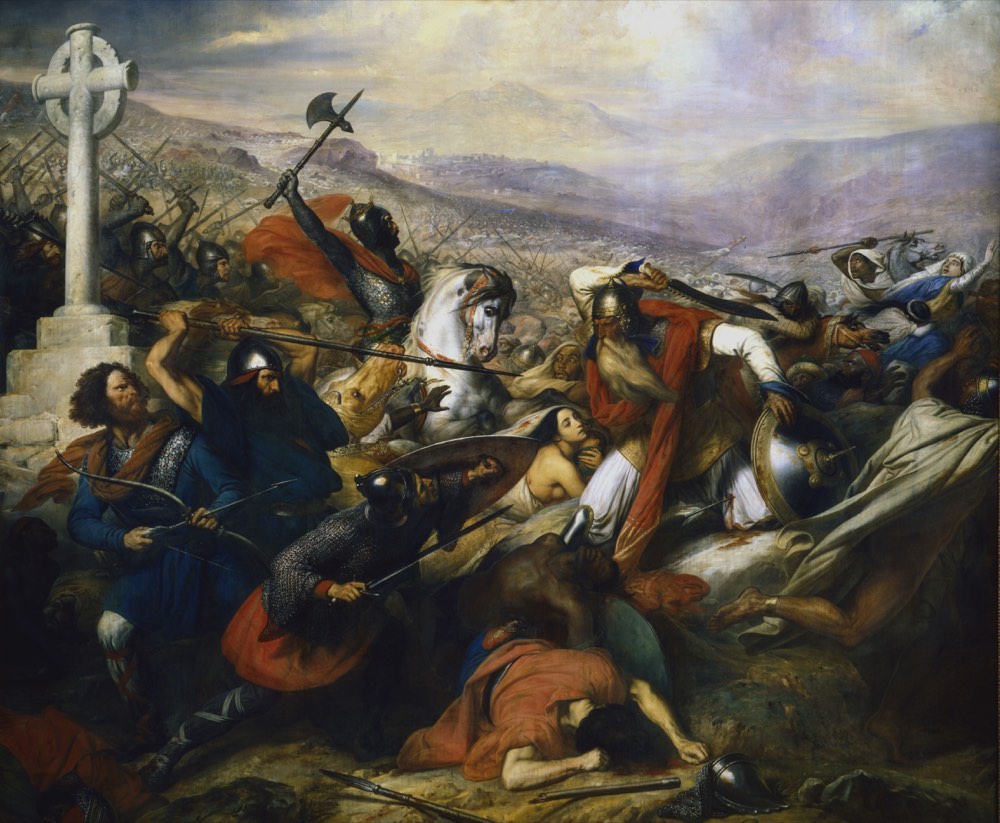
In 732, a Frankish army led by Charles Martel confronted an Umayyad force somewhere between Tours and Poitiers. Contemporary evidence is sparse, but the Franks held their position and the Umayyad commander Abd al-Rahman was killed; the invading army withdrew south. Later writers portrayed the battle as the moment that 'saved' Christian Europe from Islamic conquest, an interpretation many modern historians consider exaggerated because the campaign's aims and strategic stakes are uncertain. The victory nevertheless strengthened Charles Martel's political and military position in Francia.
Going Deeper
Tours owes its world-historical billing largely to one sentence of Edward Gibbon's, imagining the Quran taught at Oxford had Charles Martel lost, and the afterlife of that sentence is now a larger scholarly subject than the fighting: Carolingian chroniclers had already inflated the day to glorify the dynasty it made, nineteenth-century nationalism canonized the savior-of-Europe reading, and modern extremist movements quote it, which scholars of memory study as part of the battle's history rather than a footnote to it. Arabic sources are the quiet corrective, since they register the day briefly as a reverse among many, under a name meaning the pavement of the martyrs, with none of the epochal weight Latin Christendom later loaded onto it. Even the year is unsettled between 732 and 733, so the event carrying all that weight is dated less securely than the interpretations built on it. Two versions of Tours coexist, and the mythic one has always traveled better.
Three new battles every day. Tap the globe where each one happened.
Play today's battles