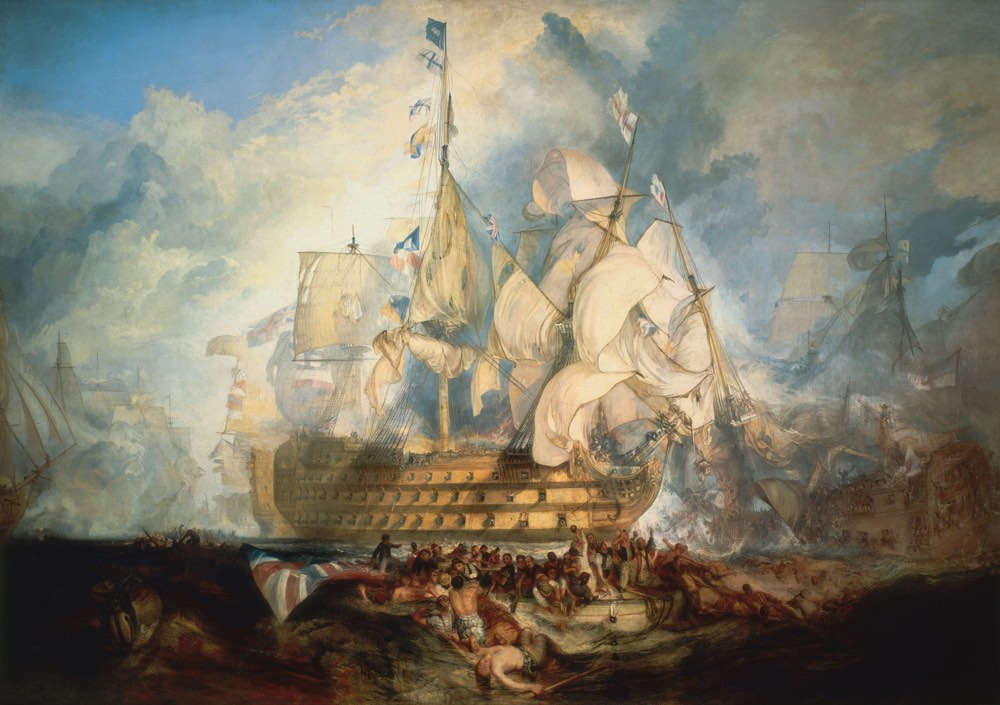
What happened
Admiral Horatio Nelson attacked the combined French and Spanish fleet off Cape Trafalgar by driving two British columns into the enemy line, deliberately breaking with the conventional parallel-line tactics of the age. The maneuver produced a close-range melee in which British gunnery and seamanship proved decisive. Twenty-two Franco-Spanish ships were captured or destroyed without the loss of a British ship, although British crews suffered heavy casualties. Nelson was mortally wounded by musket fire during the battle. Trafalgar destroyed Napoleon's immediate prospects of challenging British command of the sea and became the defining victory of Nelson's career.
Going Deeper
Trafalgar's myth was under construction before the smoke cleared: Nelson's death at the moment of victory gave Britain a secular saint, and the signal 'England expects' plus the dying 'Kiss me, Hardy' became national scripture - the latter so discomfiting to later Victorians that some insisted he said 'Kismet.' Historians have complicated the strategic claim that Trafalgar saved Britain from invasion, since Napoleon had already broken up the invasion camp and marched east weeks before the battle; its real effect was securing a century of naval supremacy. Scholarship has also recovered the fleet's diversity - muster books show sailors from dozens of nations, including free Black seamen - against the all-English legend. Collingwood, who actually commanded the fleet through the battle's aftermath and the storm that followed, remains the battle's perpetually undercredited figure.
Three new battles every day. Tap the globe where each one happened.
Play today's battles