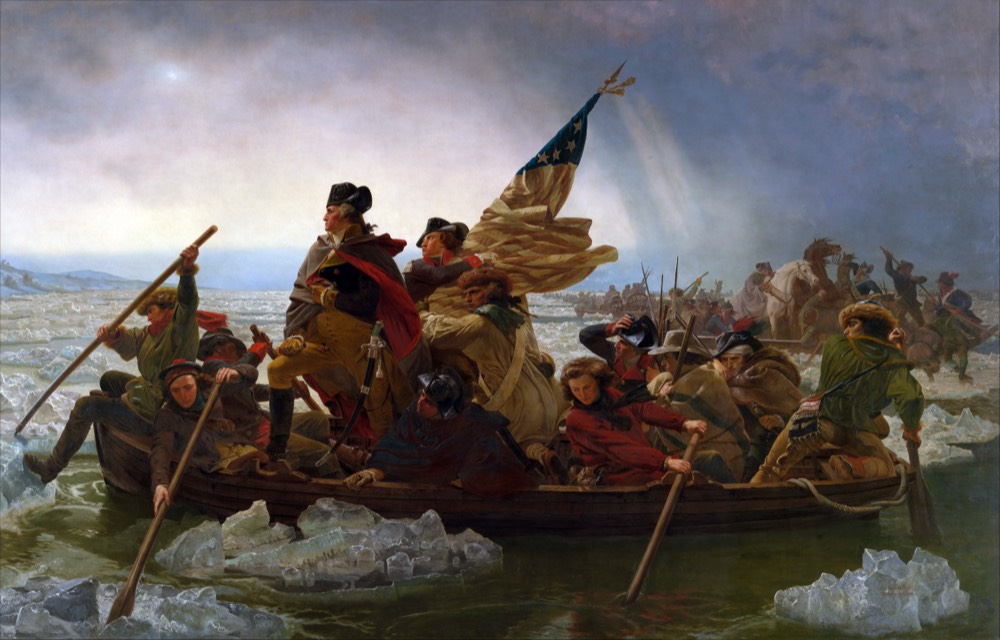
What happened
Before dawn on December 26, 1776, George Washington crossed the Delaware River with an army whose enlistments were days from expiring and marched nine miles through sleet to attack the Hessian garrison at Trenton. Two supporting columns never got across, but the surprise held: the Continentals came in from two directions, took the streets before the garrison could form, and captured most of it in under an hour. Colonel Rall, the Hessian commander, was mortally wounded. The long-told explanation that the Hessians were sleeping off a Christmas drunk is not supported by the evidence; they were worn down by weeks of raids and did not expect an army in that weather. Trenton and the follow-up at Princeton a week later revived enough enlistments and morale to keep the Revolution in the field through the winter.
Going Deeper
Trenton is a case study in how a small action becomes a founding myth. The drunken-Hessian story spread through nineteenth-century popular histories and has been steadily dismantled by scholars working from Hessian regimental records, which show an alert but exhausted garrison and a commander who had asked for reinforcement. Emanuel Leutze's 1851 painting, made in Düsseldorf as a statement about European revolution, gets the boat, the ice, the light, and the flag wrong, and remains the image most Americans hold of the crossing. David Hackett Fischer's account reframed the campaign around the militia war in New Jersey rather than the single night, and the Hessians themselves have been reassessed from caricature into a professional force with its own politics and desertion problem.
Three new battles every day. Tap the globe where each one happened.
Play today's battles