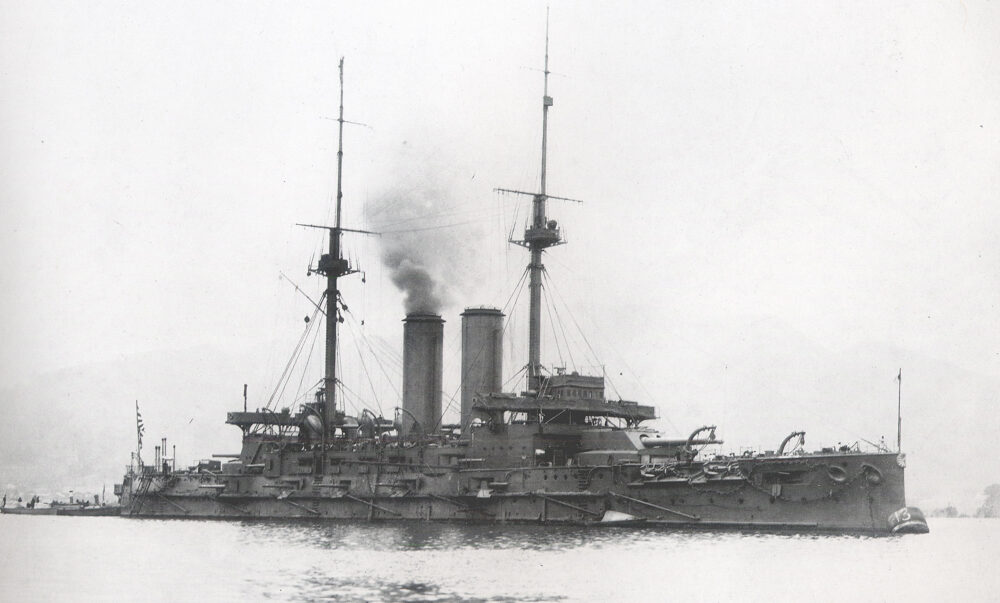
What happened
On May 27-28, 1905, Admiral Togo Heihachiro's fleet annihilated Russia's Second Pacific Squadron in the Tsushima Strait, ending an extraordinary voyage of roughly 18,000 nautical miles from the Baltic. Togo gained a decisive positional advantage and superior Japanese gunnery, speed, communications, and training devastated the Russian battle line; night torpedo attacks compounded the defeat. Nearly the entire Russian squadron was sunk, captured, or interned, against very light Japanese ship losses. The catastrophe forced Russia toward the peace negotiations at Portsmouth and announced Japan's arrival as a first-rank naval power. Historians commonly describe Tsushima as the first modern naval victory of an Asian power over a major European power, and navies worldwide studied its lessons.
Going Deeper
The voyage that ended here had already nearly caused a second war when the Russian fleet opened fire on British fishing boats in the North Sea, believing them to be torpedo craft, an episode settled by an international commission of inquiry that helped set the pattern for handling such incidents. The result was read worldwide as the first modern defeat of a European power by an Asian one, and its reception among colonized peoples from Egypt to India is documented in memoirs of the period, including Nehru's, where it appears as a formative piece of news. The same victory had a long and less happy effect inside Japan, where it fixed a doctrine of the single decisive fleet battle that the navy was still pursuing decades later against a different opponent. In Russia the defeat fed directly into the upheaval of 1905, which is why the battle appears in political histories as often as naval ones.
Three new battles every day. Tap the globe where each one happened.
Play today's battles