What happened
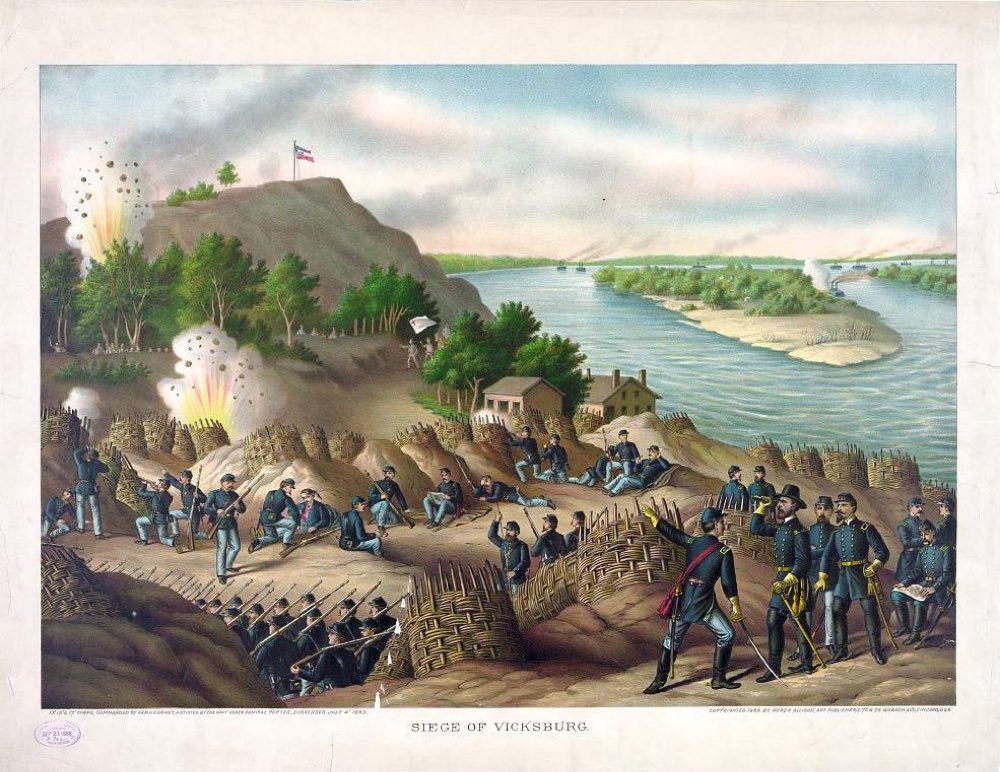
Vicksburg guarded the Mississippi River and became one of the Union's most important strategic objectives. In spring 1863, Ulysses S. Grant crossed south of the city, defeated Confederate forces in a rapid inland campaign, and drove Lt. Gen. John C. Pemberton's army into the Vicksburg defenses. After failed assaults on May 19 and 22, Grant began formal siege operations on May 23. Forty-seven days later the Confederate garrison surrendered on July 4. The fall of Vicksburg, followed by Port Hudson, gave the Union control of the Mississippi and split the Confederacy geographically, while greatly elevating Grant's national reputation.
Going Deeper
Grant's campaign is taught as a model of maneuver and was doubted at the time by Sherman among others, and the paper trail of that doubt survives in letters both men later had reason to characterize carefully. The siege produced an unusual civilian record, since townspeople dug caves into the loess bluffs and several kept diaries there, which is why Vicksburg is one of the few Civil War sieges that can be read from inside. The story that the town refused to celebrate Independence Day for eighty years after surrendering on the fourth of July is a local tradition that has been considerably tidied in the retelling, and historians have found the observance patchy rather than absent. The ironclad USS Cairo, sunk by a mine in 1862, was raised from the Yazoo in the 1960s and now sits at the park, which makes the campaign one of the better-excavated of the war.
Three new battles every day. Tap the globe where each one happened.
Play today's battles