What happened
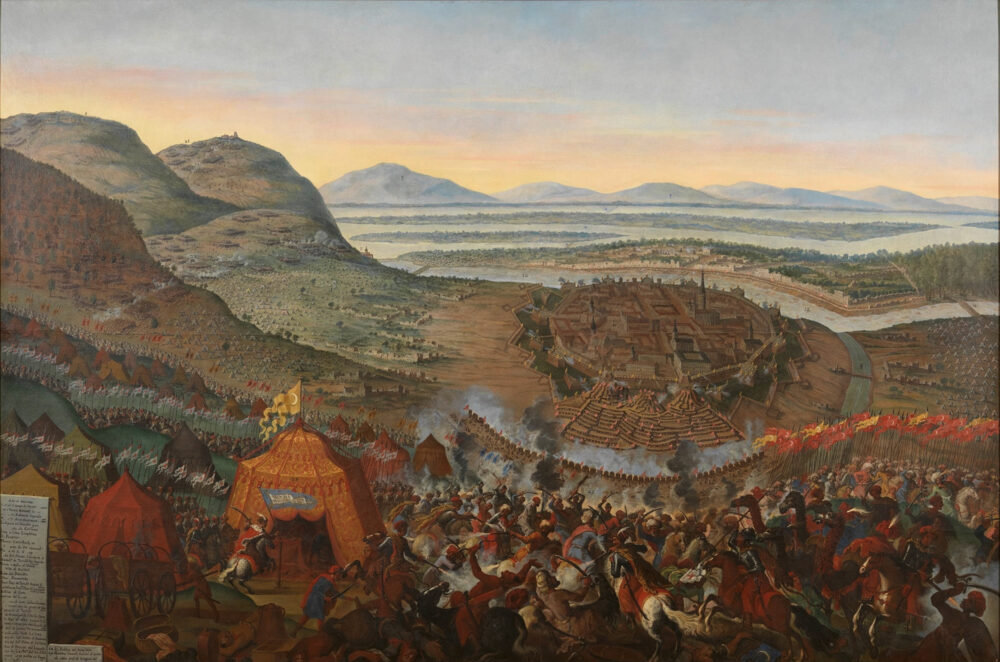
After roughly two months of Ottoman siege, Vienna was under severe pressure when a relief army under Polish King Jan III Sobieski attacked from the Kahlenberg heights on September 12, 1683. The day-long battle culminated in a huge late-afternoon cavalry attack, commonly estimated at about 18,000 Polish, Imperial, and German horsemen, including Sobieski's winged hussars. The Ottoman army broke and abandoned the siege; Kara Mustafa was later executed. The victory opened a long Habsburg-led counteroffensive that pushed Ottoman power back across much of Hungary. Vienna 1683 is often treated as a major turning point in the Ottoman-Habsburg struggle, though the Ottoman Empire remained a major power for centuries.
Going Deeper
No battle in this collection carries a heavier modern political load: the phrase about the gates of Vienna is standard currency in European anti-Muslim movements, and the 2011 Norwegian mass murderer built his manifesto around it, which has left historians of the siege explaining repeatedly that this was a Habsburg-Ottoman war over territory and vassals rather than a civilizational duel. Credit has been argued between Polish and Austrian traditions for three centuries, flaring again around the 1983 tercentenary, with Sobieski's role either the decisive stroke or one contingent among several depending on who is telling it. The charming stories attached to the siege, the croissant shaped like the Ottoman crescent and the first Viennese coffee house opened with abandoned Ottoman beans, are both later inventions that food historians have taken apart. Ottoman accounts put the failure down to court politics and a siege pressed too slowly, which is why the grand vizier was executed rather than pensioned.
Three new battles every day. Tap the globe where each one happened.
Play today's battles