What happened
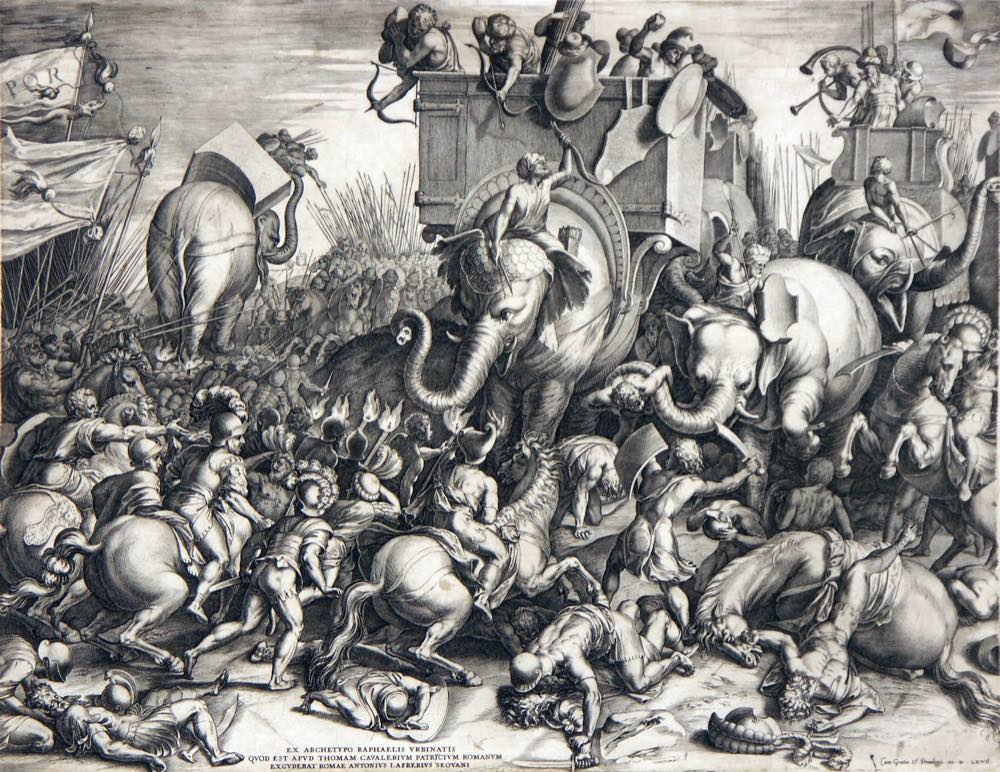
In 202 BC, Scipio's Roman army met Hannibal in North Africa in the decisive battle of the Second Punic War. Roman infantry opened lanes to blunt the initial elephant charge, and the Roman-Numidian cavalry drove off its Carthaginian counterparts before returning to strike Hannibal's army from the rear. Ancient sources report enormous Carthaginian losses, but exact totals cannot be verified. The defeat forced Carthage to seek peace on Roman terms and confirmed Rome as the dominant power in the western Mediterranean. Ancient writers also describe a pre-battle meeting between Hannibal and Scipio, though its dialogue is literary rather than stenographic.
Going Deeper
Everything close to eyewitness comes through Polybius, who wrote with access to the Scipio family and to Laelius, Scipio's friend and subordinate, which makes one of the fullest surviving accounts of any ancient battle also a partisan one. No native Carthaginian narrative or historical prose survives, only an agricultural treatise in translation, a voyage account, scattered fragments and inscriptions, so a civilization that fought Rome for over a century is known almost entirely through the people who destroyed it, and Hannibal's version of his own defeat exists only where his enemies chose to quote it. The site has never been located, and the Zama marked on modern maps in Tunisia is an identification of convenience rather than an excavated field. In military thought the day is celebrated as the answer to Cannae rather than as a model in its own right, since it was Cannae that staff colleges spent centuries trying to reproduce, which says more about how armies wanted to imagine war than about either battle.
Three new battles every day. Tap the globe where each one happened.
Play today's battles