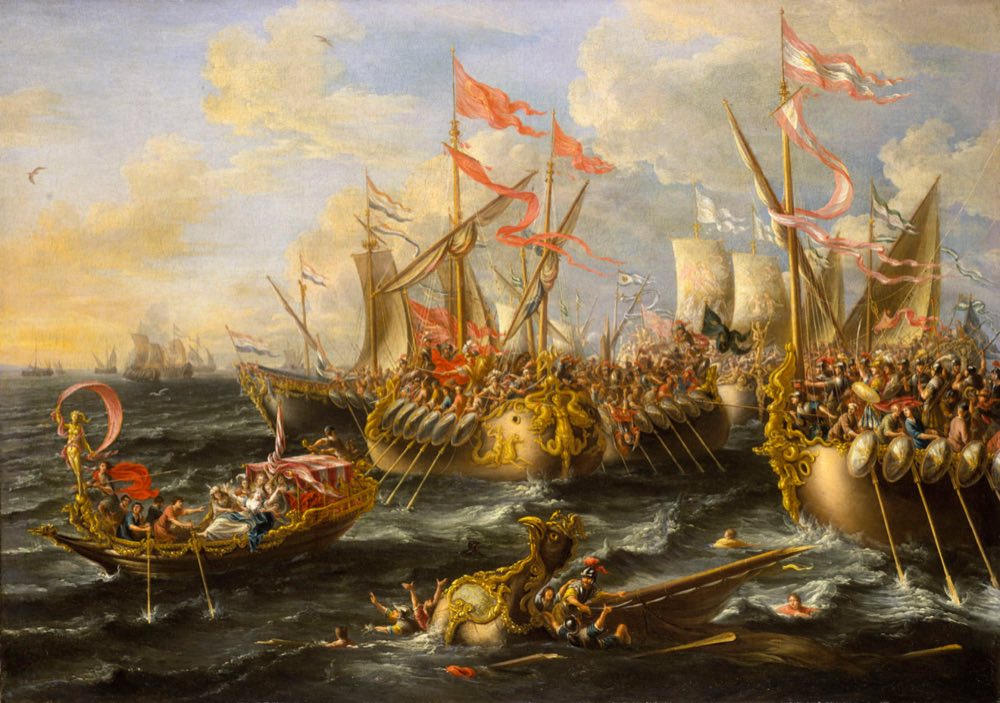
What happened
The final struggle between Octavian and the alliance of Mark Antony and Cleopatra culminated in a naval battle off western Greece on September 2, 31 BC. Octavian's fleet was directed operationally by Marcus Agrippa. Antony and Cleopatra attempted to break through the blockade; Cleopatra's squadron escaped through the fighting and Antony followed, while much of the remaining fleet was captured or surrendered. Within a year both Antony and Cleopatra were dead, leaving Octavian unrivaled. In 27 BC he took the name Augustus, marking the beginning of Rome's imperial political order.
Going Deeper
Actium was written by the winner's side and largely by poets on his payroll, which is why historians treat the familiar narrative of an eastern queen unmanning a Roman general as a political program rather than a description of events. The technical argument has run for a century over whether this was a fleet battle at all or a planned breakout from a blockade that had already beaten Antony through disease and desertion, with Cleopatra's departure reading as either treachery or the agreed plan depending on the reconstruction. Archaeology has supplied the hardest evidence: the victory monument above Nicopolis carried sockets for the bronze rams of captured ships, and excavation since the 1990s has let scholars estimate the size of the vessels actually taken. Cleopatra's afterlife, from Roman invective through Shakespeare to film, is now a research subject in its own right, and one in which almost nothing survives that she wrote.
Three new battles every day. Tap the globe where each one happened.
Play today's battles