What happened
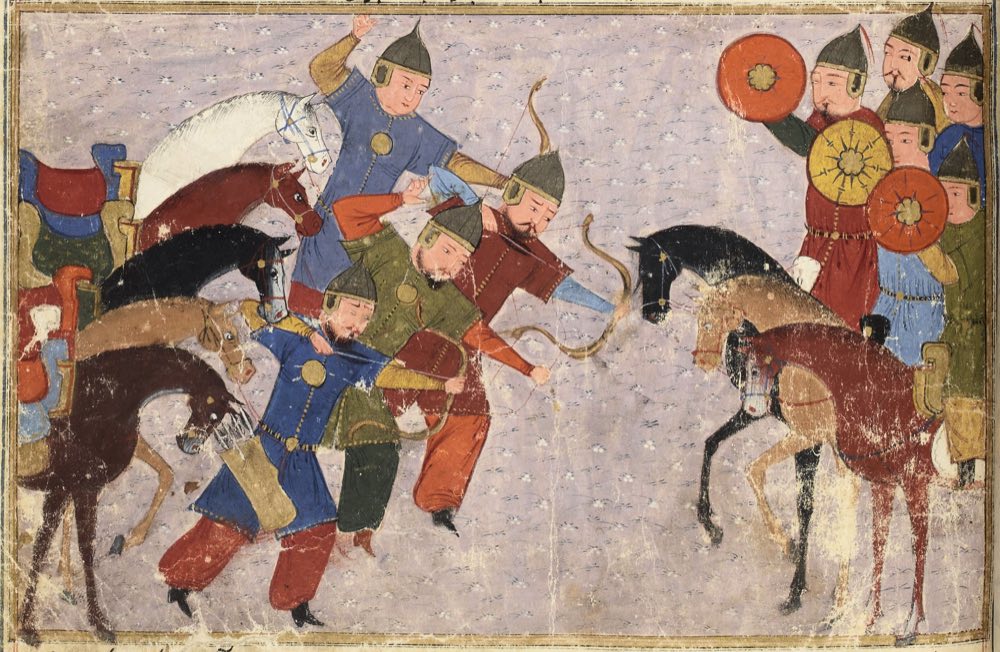
In 1260, after the Mongol capture of Baghdad and advance into Syria, a Mamluk army from Egypt confronted a Mongol force led by Kitbuqa near Ain Jalut. The Mamluks used maneuver and a feigned withdrawal before counterattacking; Kitbuqa was killed and the Mongol army was defeated. The battle halted that particular Mongol advance into Egypt and helped establish Mamluk dominance in Syria, though the Mongols had suffered important defeats elsewhere before 1260 and later launched additional campaigns into the region. Some modern accounts link Ain Jalut with early battlefield gunpowder weapons, but the nature and importance of those weapons remain debated.
Going Deeper
The claim that this is where the Mongols were stopped has been steadily qualified: Hulagu had already taken the bulk of his army east after the Great Khan's death, and historians of Mongol logistics argue that the pastures of Syria and Palestine could never have fed the herds a full Mongol army needed, which would make the limit environmental as much as military. Nearly all the detail comes from Mamluk-era writers describing the founding victory of the regime that employed them, and the awkward sequel, Baybars killing Qutuz on the road home and taking the sultanate for himself, is reported by those same writers with varying candor. The Mamluk state remains one of the more counterintuitive systems historians have to explain, a government run by men bought as slaves and trained as cavalry, who were expected not to pass power to their sons, though several of the strongest of them did. The battle has had a vigorous modern political afterlife in the region as proof that an invasion from the east can be broken, which has carried it into rhetoric far removed from the Jezreel Valley.
Three new battles every day. Tap the globe where each one happened.
Play today's battles