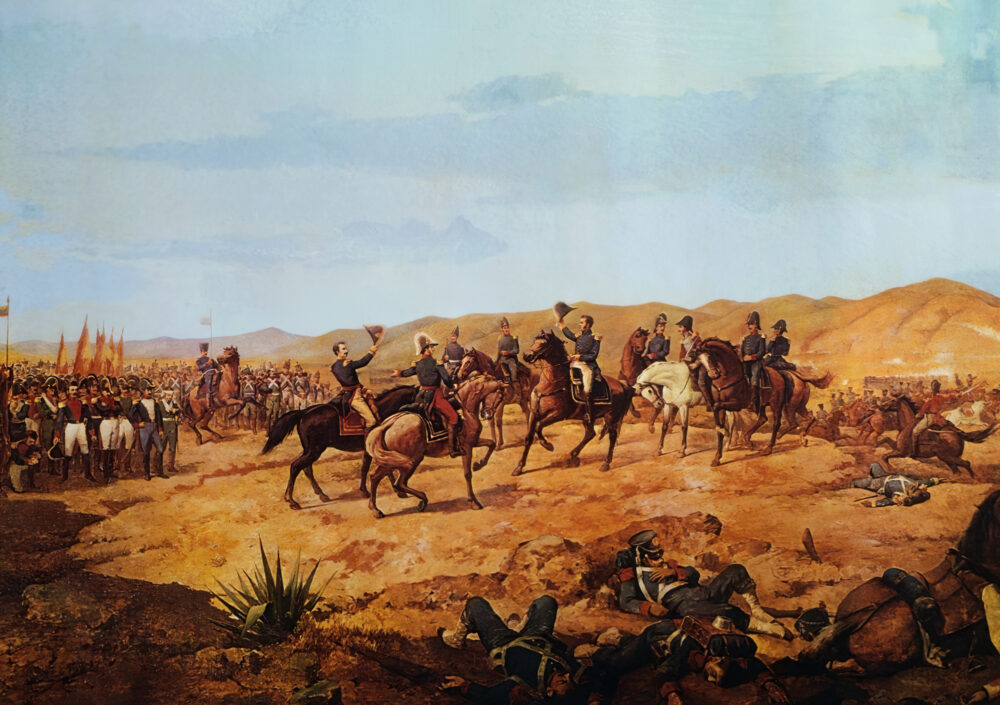
What happened
On December 9, 1824, Antonio José de Sucre's patriot army defeated the main royalist force of Viceroy José de la Serna on the high plain of Quinua, near Ayacucho. Outnumbered, Sucre struck as the royalist divisions descended from the heights, broke their attack in detail, and captured the wounded viceroy himself. The surrender that followed committed royalist forces across Peru to capitulate, effectively ending Spanish rule on the South American mainland. Ayacucho is conventionally treated as the closing battle of the Spanish American wars of independence, though isolated royalist holdouts persisted for a time afterward. Sucre, still in his twenties, became the first president of Bolivia the next year.
Going Deeper
The capitulation signed after the battle is the document that matters, since it committed royalist forces across Peru to surrender, and historians read its generous terms as the reason a long war ended relatively cleanly rather than in a decade of holdouts. Those Spanish officers went home and became a faction in their own country's politics, where ayacuchos was used for years as an insult aimed at the returning veterans around Espartero. The most substantial revision has come from work on who actually fought: both armies were largely Andean, indigenous soldiers made up much of the royalist force as well as the patriot one, and the neat story of Spaniards against Americans does not survive contact with the muster rolls. Sucre's own memory is claimed by several republics at once, which is a common problem with the independence wars and an acute one here.
Three new battles every day. Tap the globe where each one happened.
Play today's battles