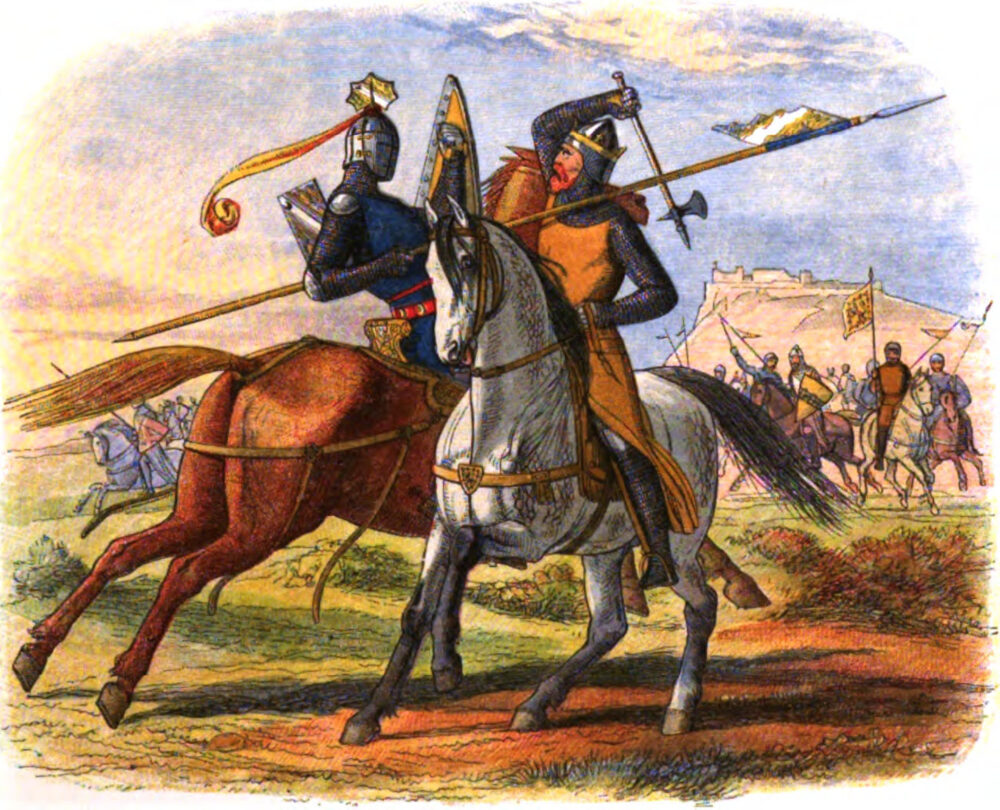
What happened
On June 23-24, 1314, Robert the Bruce's army destroyed a much larger English force sent to relieve Stirling Castle, in the decisive battle of Scotland's wars of independence. The opening day produced one of medieval warfare's famous single combats: the English knight Henry de Bohun charged Bruce, who sidestepped and split his helmet with an axe. On the second day the Scottish schiltrons, dense hedgehogs of spears, advanced across constricted, boggy ground where English cavalry and archers could not deploy, and the English army collapsed into the streams behind it; Edward II barely escaped. The victory did not immediately win recognition of Scottish independence, which took another fourteen years, but it made Bruce's kingship unassailable and entered Scottish identity permanently.
Going Deeper
Bannockburn manages to be Scotland's most famous battle and one whose site is genuinely uncertain: historians have argued for over a century about where the second day's main action occurred, with the Carse to the east of the traditional monument now favored by many, and archaeological finds remaining stubbornly sparse. Numbers are equally contested; the Victorian picture of 100,000 Englishmen is long dead, and modern estimates shrink both armies considerably. The battle's memory has been repeatedly remobilized: by Barbour's epic poem within living memory, by Burns' 'Scots Wha Hae,' and by modern nationalism, with the 700th anniversary falling months before the 2014 independence referendum. Scholars of memory treat Bannockburn as a case study in a medieval event doing continuous political work.
Three new battles every day. Tap the globe where each one happened.
Play today's battles