What happened
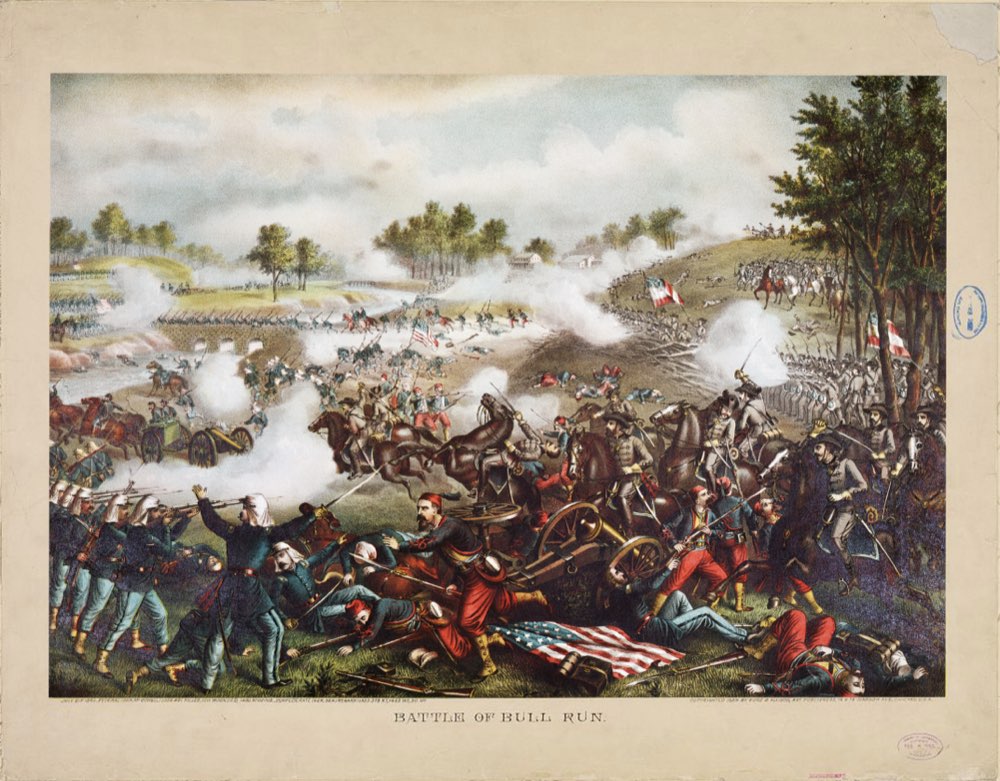
On July 21, 1861, the first major land battle of the American Civil War turned into a rout, and the crowd of Washington civilians who had ridden out to watch got caught in it. McDowell's flanking march went well for most of the morning until Confederate reinforcements arriving by railroad stiffened the line on Henry House Hill, where a Virginia brigade under Thomas Jackson held long enough to earn him the name Stonewall. The Union attack stalled, then broke, and the retreat to Washington dissolved into a jam of soldiers, wagons, and spectators. Judith Henry, an elderly widow who could not be moved from her house on the hill, was killed by shellfire. Both governments had expected a short war settled in an afternoon, and after Bull Run neither one did.
Going Deeper
The battle's most famous sentence is also its most argued: Barnard Bee's remark about Jackson standing like a stone wall survives only secondhand, and because Bee was killed hours later, historians have never settled whether it was praise or a complaint that Jackson was standing still while Bee's own men were destroyed. The picnicking spectators were real but have grown in the telling from a few dozen carriages into a festival. The naming split visible here runs through the whole war, with Union reports favoring waterways and Confederate ones favoring towns, which is why Bull Run and Manassas are the same fight. The field itself became a landmark in American battlefield preservation after a shopping mall in the 1980s and a proposed Disney history park in 1994 were both fought off, and the Park Service's interpretation has since shifted toward slavery and the civilians on the ground.
Three new battles every day. Tap the globe where each one happened.
Play today's battles