What happened
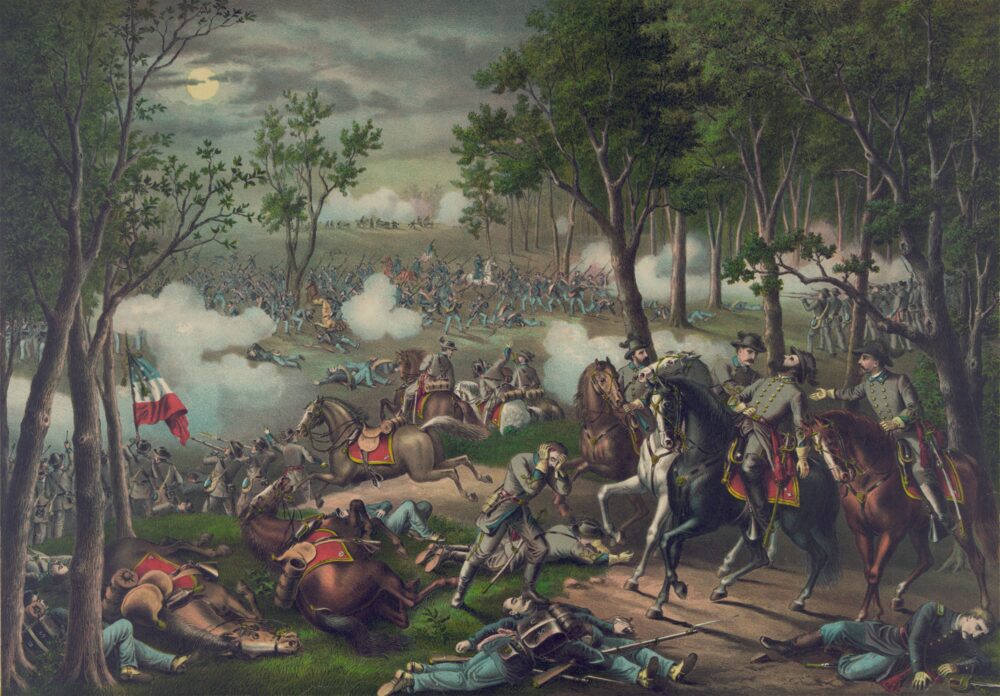
In early May 1863, Robert E. Lee won what is often called his masterpiece, defeating a Union army twice his size in the tangled Virginia woodland around Chancellorsville. With audacity that violated every textbook, Lee divided his outnumbered army twice, sending Stonewall Jackson's corps on a daylong concealed march that crashed into the Union right at dusk on May 2 and rolled it up in panic. The victory's cost defined its memory: Jackson, scouting ahead that night, was shot by his own men and died of complications eight days later. 'I have lost my right arm,' Lee said. Union commander Joseph Hooker, who had begun the campaign brilliantly, seemed to lose his nerve and withdrew an army that much of it believed unbeaten. Emboldened, Lee marched north within weeks, toward a Pennsylvania crossroads called Gettysburg.
Going Deeper
Chancellorsville is the Civil War's great debate about the price of brilliance: Lee won immortality and lost 22 percent of his army (casualties the Confederacy could not replace), leading some historians to argue his aggressive masterpieces were strategically self-destructive, a controversy running from British theorist J.F.C. Fuller to the present. Jackson's death became the Lost Cause's central what-if, the counterfactual that Gettysburg would have gone differently with him alive: unanswerable, and endlessly answered. Hooker's collapse has its own literature, from the concussion he suffered mid-battle to his famous alleged confession that he 'lost confidence in Hooker,' a quote of shaky pedigree. The battlefield's Wilderness would burn again a year later in Grant's overland campaign, with wounded men dying in the brushfires, the two battles' overlapping ground making it among the most haunted acreage in America.
Three new battles every day. Tap the globe where each one happened.
Play today's battles