What happened
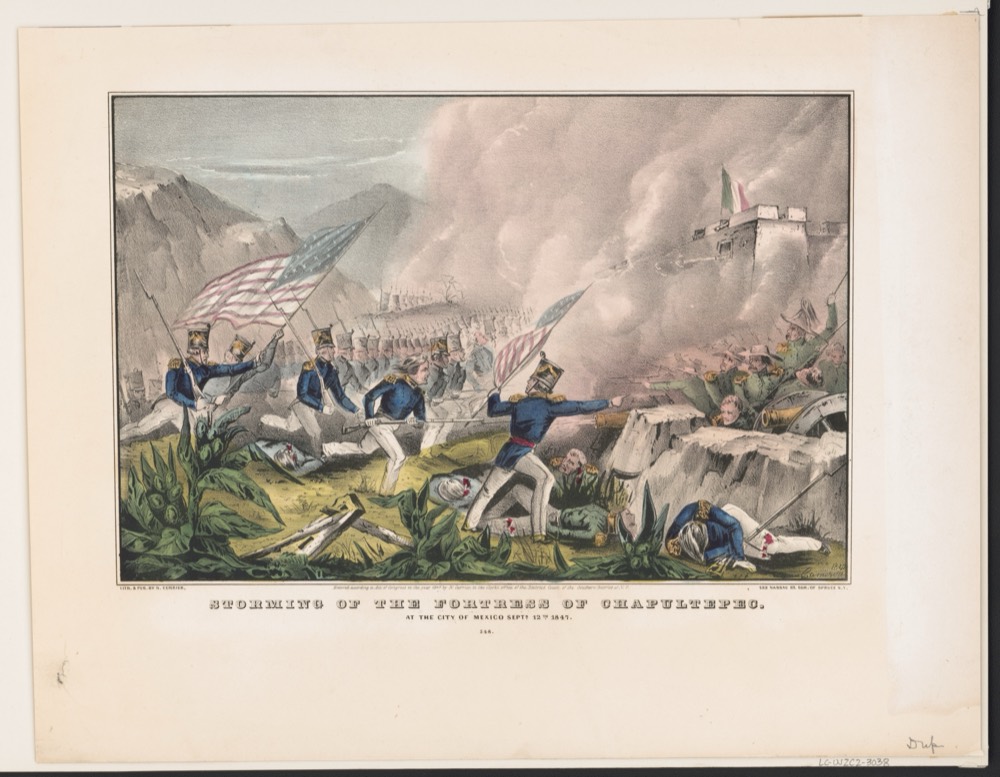
The castle on Chapultepec hill guarded the western approach to Mexico City and housed the national military academy, and on the morning of September 13, 1847, American storming parties went up the slope with scaling ladders. The defenders were outnumbered roughly seven to one and the position fell in about ninety minutes; the capital surrendered the next day. Among the dead were cadets of the academy, and Mexican tradition holds that six of them fought to the end with one wrapping himself in the flag and leaping from the walls, a story whose documentary basis is thin but whose hold on national memory is total. The treaty signed five months later transferred roughly half of Mexico's territory to the United States. American marines took the phrase about the halls of Montezuma from this day.
Going Deeper
The Ninos Heroes are a case study in how a nation builds a memory it needs: the story grew through the late nineteenth century, acquired its canonical six names, and was sealed in 1952 when bones found at the site were declared theirs and interred beneath a monument, an identification historians have questioned ever since without making any dent in the commemoration. The same battle carries a second memory in a third country, since the San Patricio battalion, Catholic immigrant deserters from the American army with the Irish its largest group, was hanged in batches nearby with the timing arranged so the condemned would see the American flag raised over the castle. The war is remembered in Mexico as a dismemberment and in the United States mostly not at all, though it sharpened the sectional crisis that led to civil war, and Ulysses Grant called it in his memoirs one of the most unjust wars ever waged. Mexican historians have also worked to recover the defenders who were not cadets, who outnumbered them and left far fewer traces.
Three new battles every day. Tap the globe where each one happened.
Play today's battles