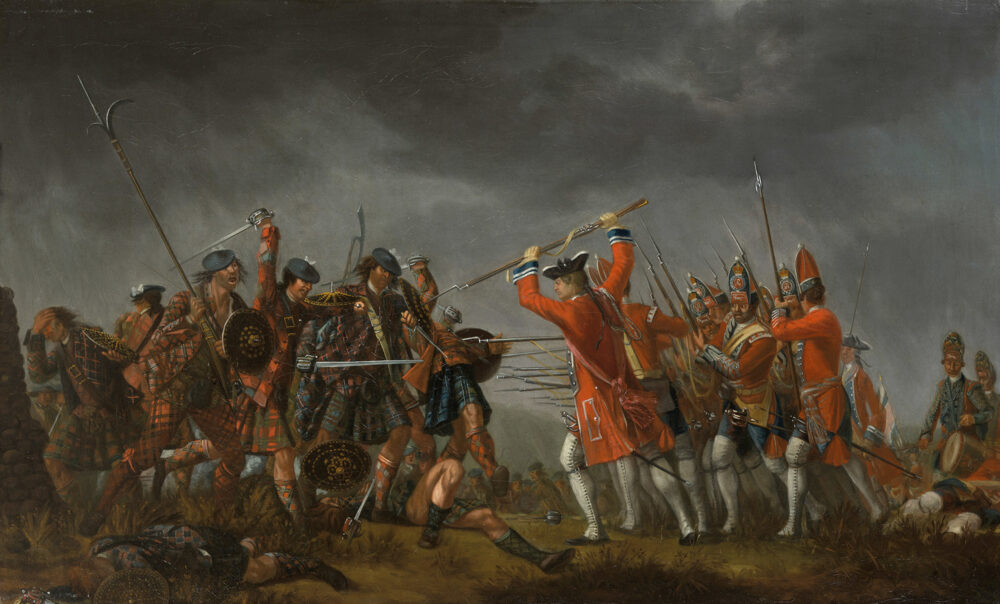
What happened
On April 16, 1746, the last pitched battle fought on British soil ended the Jacobite rising in under an hour on Drummossie Moor near Inverness. Charles Edward Stuart's exhausted army, marched through the previous night in an aborted surprise attack, charged across open, boggy ground into artillery and disciplined musketry, and was broken; government cavalry then rode down the fugitives. The aftermath became as infamous as the battle: wounded men were killed on the field, and the Duke of Cumberland's subsequent repression earned him the name 'Butcher.' The rising's collapse brought a sustained government assault on Highland clan society: disarmament, proscription of tartan, and the dismantling of chiefly power. The romantic legend of Bonnie Prince Charlie's escape grew in inverse proportion to the cause's actual ruin.
Going Deeper
Culloden's popular framing as Scotland versus England is the first thing modern historians correct: more Scots fought against Charles than many assume. Lowland and Highland units served in the government army, whole clans opposed the Stuarts, and the rising is better understood as a British civil war with dynastic and religious stakes plus a French geopolitical dimension. The romanticization came later, sped by Walter Scott and Victorian tartanry, converting a failed dynastic coup into a national tragedy of the Gael, a transformation scholars of memory find as interesting as the battle. Debate continues over how premeditated the post-battle killings were and how directly Culloden should be linked to the Clearances that followed decades later. The moor itself has been painstakingly restored to its 1746 state, and the clan grave markers remain among Britain's most visited and most quietly emotional battlefield monuments.
Three new battles every day. Tap the globe where each one happened.
Play today's battles