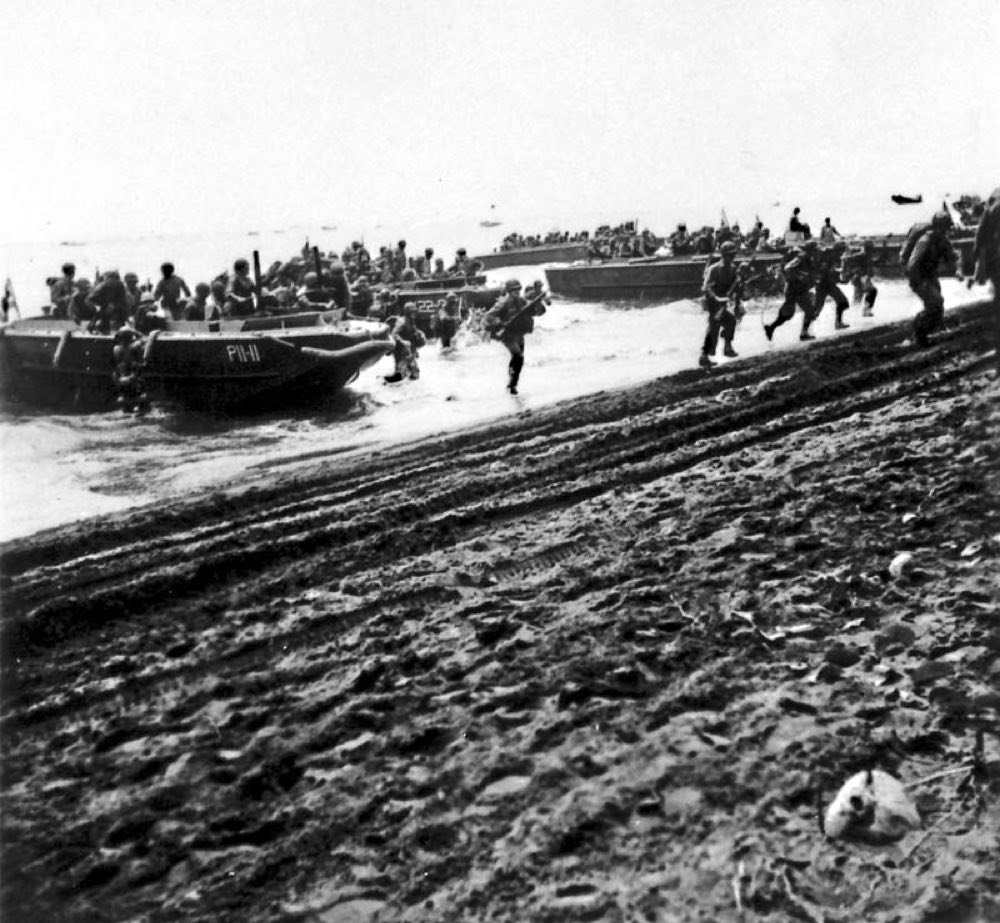
What happened
The U.S. offensive in the Solomon Islands began on August 7, 1942, when Marines landed on Guadalcanal and seized a partially completed Japanese airfield, soon renamed Henderson Field. For six months the campaign revolved around control of that airfield and the surrounding seas, producing repeated night naval battles in what became known as Ironbottom Sound and hard ground fighting at places such as Edson's Ridge. Japan evacuated its surviving ground forces in February 1943. Guadalcanal was the first major Allied offensive campaign against Japan and, together with Midway, helped shift the Pacific War from Japanese expansion toward a long Allied advance.
Going Deeper
Guadalcanal's historiography emphasizes what the island myth obscures: it was as much a naval and air attrition campaign as a jungle fight, with five major surface battles filling Ironbottom Sound with so many wrecks the name is literal, and Japanese losses to starvation and disease (their soldiers called it 'Starvation Island') exceeding combat deaths. The campaign is studied as the true strategic turning point of the Pacific by historians who argue Midway stopped Japan but Guadalcanal started the drive that beat her, grinding away irreplaceable ships, aircraft, and above all trained pilots. American memory largely forgot the Coastwatchers and Solomon Islander scouts whose reporting made the defense possible, a gap recent scholarship has worked to close. Deep-water archaeology in the Sound, much of it by Robert Ballard and successors, turned the campaign's losses into one of the world's great underwater battle-graves.
Three new battles every day. Tap the globe where each one happened.
Play today's battles