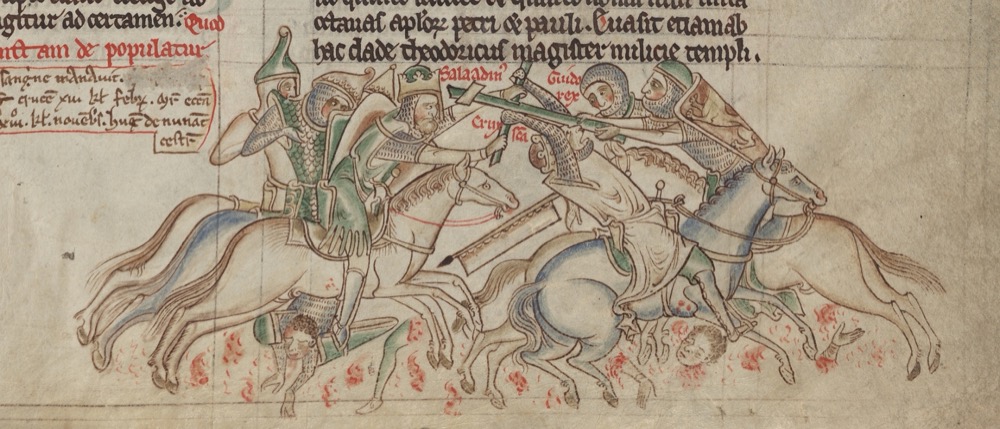
What happened
In July 1187, Saladin drew the main field army of the Kingdom of Jerusalem away from secure water sources toward Tiberias. Exhausted by heat, thirst, harassment, and smoke from fires on the dry grass, the Crusader army was surrounded near the Horns of Hattin and largely destroyed or captured. King Guy was taken prisoner and the relic known as the True Cross was captured. With the kingdom's main army gone, Saladin captured Jerusalem in October. The disaster helped trigger the Third Crusade, but Hattin permanently altered the balance of power in the crusader states.
Going Deeper
Hattin is studied as much for its decision-making as its outcome: Guy of Lusignan's choice to march a kingdom's entire field army across waterless hills in July, against advice, remains a staff-college case in how factional politics (the court feud between Raymond of Tripoli and the Guy-Reynald party) produces military catastrophe. Saladin's biographers wrote close to events, giving unusually rich (if partisan) documentation, including his execution of the Templar and Hospitaller prisoners and of Reynald of Châtillon personally, episodes modern historians present unvarnished against both the chivalric-Saladin legend and its debunkers. The True Cross relic captured on the field vanished from history, a loss contemporaries weighed as heavily as the army's. Battlefield archaeology on the Horns since the 1990s has mapped the final stand, and the site now anchors debates about how modern Israel, and modern Islamism, each use crusader history.
Three new battles every day. Tap the globe where each one happened.
Play today's battles