What happened
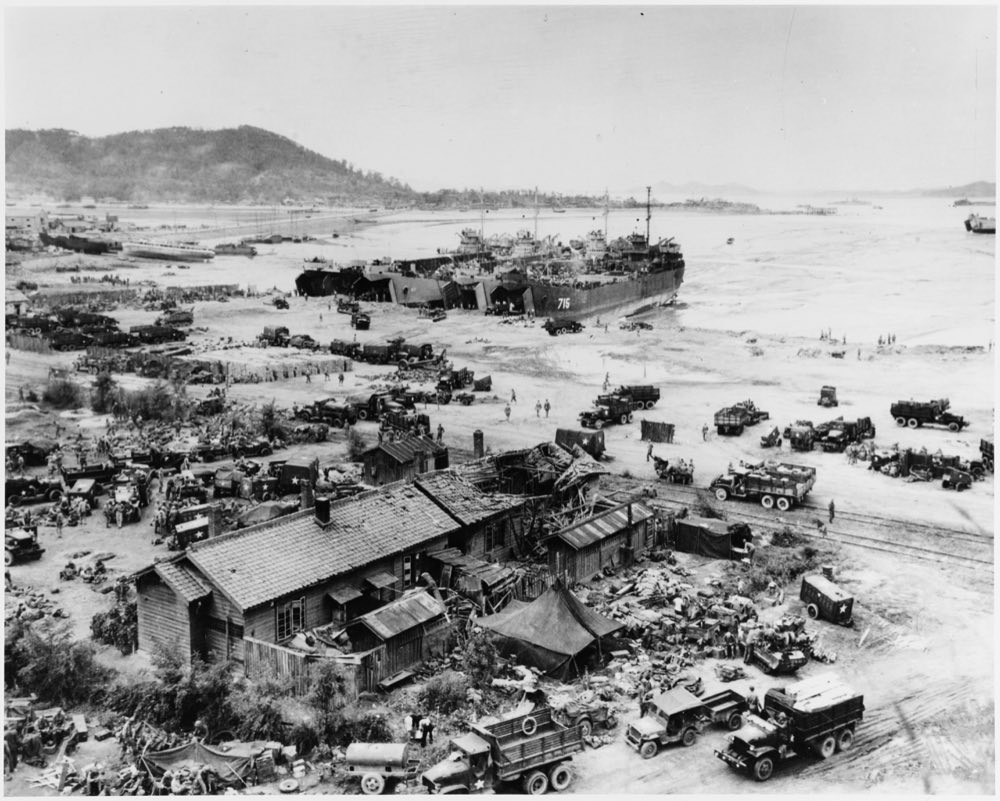
With U.N. forces confined to the Pusan Perimeter in September 1950, General Douglas MacArthur pushed for an amphibious landing at Inchon despite its extreme tides, mudflats, narrow channels, and seawalls. The very difficulty of the port contributed to surprise. U.S. Marines seized Wolmi-do on September 15 and landed against the city later that day. The operation threatened North Korean supply lines and helped force a general retreat as U.N. forces also broke out of the Pusan Perimeter. Seoul was recaptured later in September. Inchon was a major operational success, though it did not by itself destroy the entire North Korean army.
Going Deeper
The landing was approved over the objections of nearly everyone professionally qualified to object, and the fact that it worked anyway is the part with consequences, since the authority MacArthur gained from it carried him north toward the Yalu against advice he was by then in no mood to take. It also settled an institutional argument, arriving a year after the unification fights in which the Marine Corps' existence as an amphibious force had been seriously questioned in Washington. American accounts generally end with the recapture of Seoul, while the cost of that recapture to the city and its people is carried mainly in Korean sources and has only recently been worked into English-language histories. The war is called three different things in the three countries that fought it, which is usually the first sign that its history is unsettled.
Three new battles every day. Tap the globe where each one happened.
Play today's battles