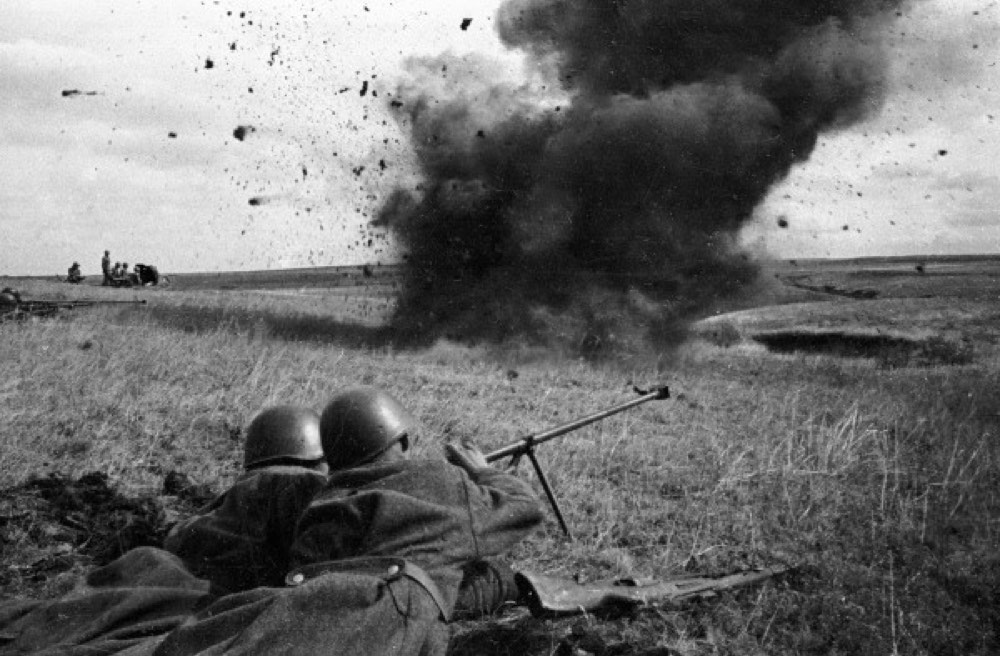
What happened
Germany's Operation Citadel attacked the Kursk salient in July 1943 after the Soviets had spent months constructing deep defensive belts of minefields, trenches, and anti-tank positions. The German advance made limited gains before being halted, while Soviet counteroffensives soon followed. The July 12 fighting near Prokhorovka became famous as a huge tank clash, but later archival research has shown that popular claims about its size and losses were greatly exaggerated. Kursk was one of the largest armored campaigns of the war and confirmed that Germany had lost the strategic initiative on the Eastern Front, but calling Prokhorovka (or even Kursk without qualification) the single largest tank battle in history is too categorical.
Going Deeper
Kursk's historiography turned over twice as the archives opened: German records showed Citadel was closer to spent than the epic telling admits, and Soviet ones exposed how much of the Prokhorovka legend was built to cover a costly, botched counterattack rather than to describe one. The deeper debate is why Hitler halted the offensive: the Allied landing in Sicily, the casualty bill, or the recognition that the salient could not be closed. What survives every revision is the strategic verdict: the last German strategic offensive in the East failed against a defense that knew it was coming, thanks partly to intelligence including the Switzerland-based Lucy ring. After Kursk the Red Army attacked essentially without pause for two years, which is why many historians rate it, not Stalingrad, as the war's true eastern turning point.
Three new battles every day. Tap the globe where each one happened.
Play today's battles