What happened
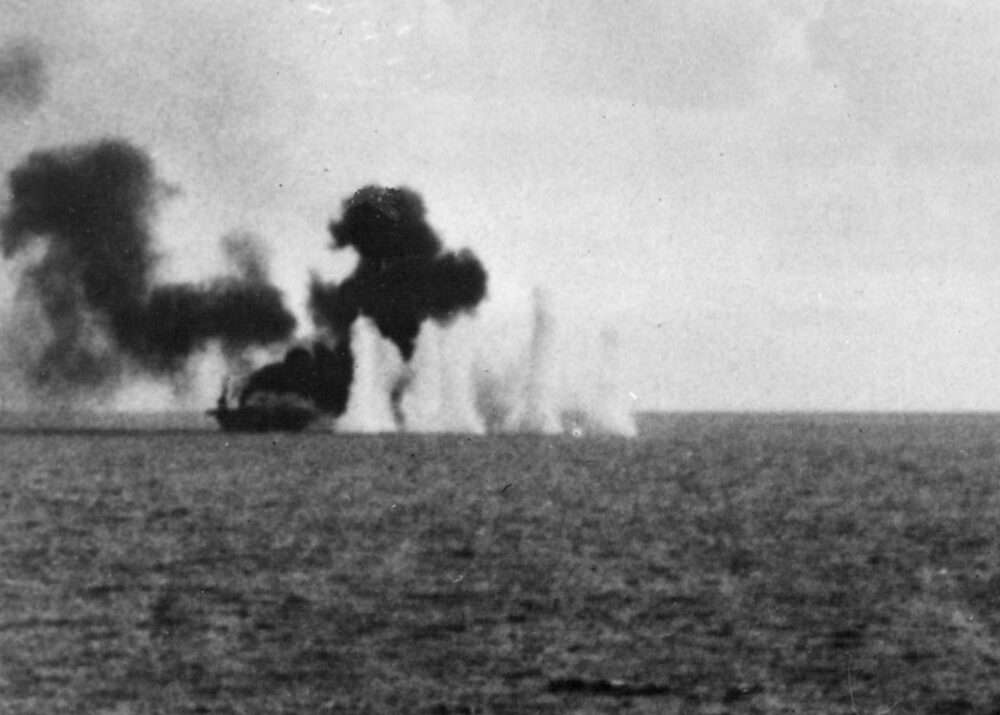
Over four days in late October 1944, the Imperial Japanese Navy committed nearly everything it had left against the American invasion of the Philippines, and lost the largest naval battle in history. The Japanese plan used its carriers, nearly planeless by then, as deliberate bait, and it worked: Admiral Halsey raced north after them with his battleships and fleet carriers, leaving the San Bernardino Strait unguarded. Through it came the superbattleship Yamato and a powerful surface fleet, which fell upon a task unit of small escort carriers and destroyers off Samar; the outgunned escorts' smoke, torpedo runs, and point-blank defiance (along with Japanese confusion) turned the giants back in one of the U.S. Navy's proudest actions. Elsewhere the battle saw history's last battleship-versus-battleship duel in Surigao Strait and the first organized kamikaze attacks. Japan's navy never sailed as a fleet again.
Going Deeper
Leyte Gulf sustains the U.S. Navy's longest-running command controversy: Halsey's dash north ('Bull's Run') left Taffy 3 naked off Samar, and the famously garbled query 'Where is Task Force 34. The world wonders' (padding text Halsey read as mockery) has its own literature; historians split between indicting his judgment and noting the ambiguous command structure that divided two fleets between Nimitz and MacArthur with no common superior on scene. An equal puzzle sits on the Japanese side: why Kurita, with the battle won off Samar, turned away. Exhaustion, misread radio traffic, and disbelief that escort carriers were his real target all compete, and he took the full answer to his grave. The battle also opens the kamikaze era, pushing scholarship into the psychology and politics of organized suicide tactics. Wreck discoveries in the deep Philippine trenches through the 2010s-2020s, including Johnston and Samuel B. Roberts at record depths, renewed both research and remembrance.
Three new battles every day. Tap the globe where each one happened.
Play today's battles