What happened
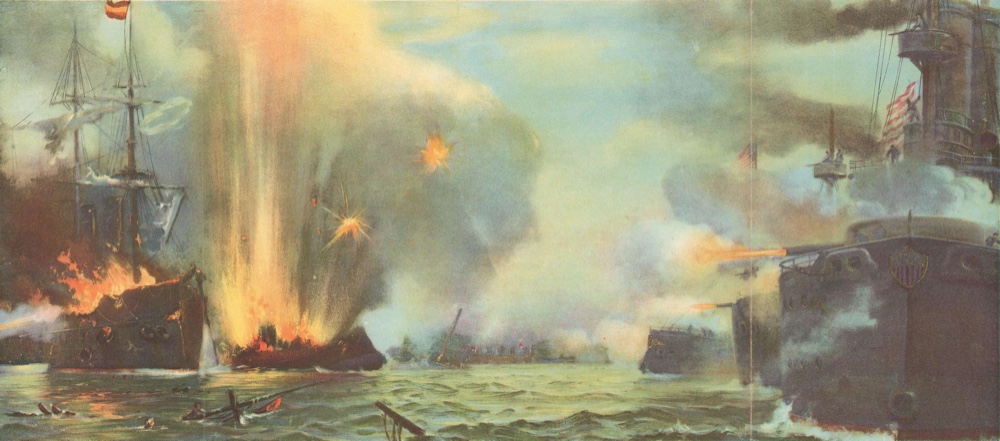
On the morning of May 1, 1898, an American squadron steamed into Manila Bay past shore batteries that barely fired, and by noon the Spanish Pacific fleet had been destroyed without the loss of a single American ship. Dewey's opening order to his flag captain, remembered as an invitation to fire when ready, has outlived almost everything else about the battle. After five passes he broke off on a mistaken report that his ammunition was nearly gone, a pause that entered legend as a stop for breakfast, then returned to finish the Spanish ships where they lay. Montojo had anchored in shallow water off Cavite specifically so his crews could wade ashore when it happened. The victory made Dewey a national hero and gave the United States a foothold it did not give up, and Filipino forces who had expected independence instead found themselves at war with their liberators within a year.
Going Deeper
Manila Bay is studied less as a battle than as the hinge of American overseas empire, and the awkward part of the story is what followed: the Philippine-American War killed far more people than the Spanish war and stayed largely absent from American textbooks for most of a century. The ammunition scare that produced the breakfast pause is documented in the squadron's own records as a signaling error, and the way it was recast as coolness under fire is a small model of how the 1898 press manufactured heroes. Dewey's fame carried him briefly into presidential speculation, which collapsed almost as fast as it appeared. Spanish accounts, less read in English, treat Montojo's dispositions as a deliberate choice to lose with minimal loss of life, and the court-martial he faced on his return acquitted him, with Dewey testifying on his behalf.
Three new battles every day. Tap the globe where each one happened.
Play today's battles