What happened
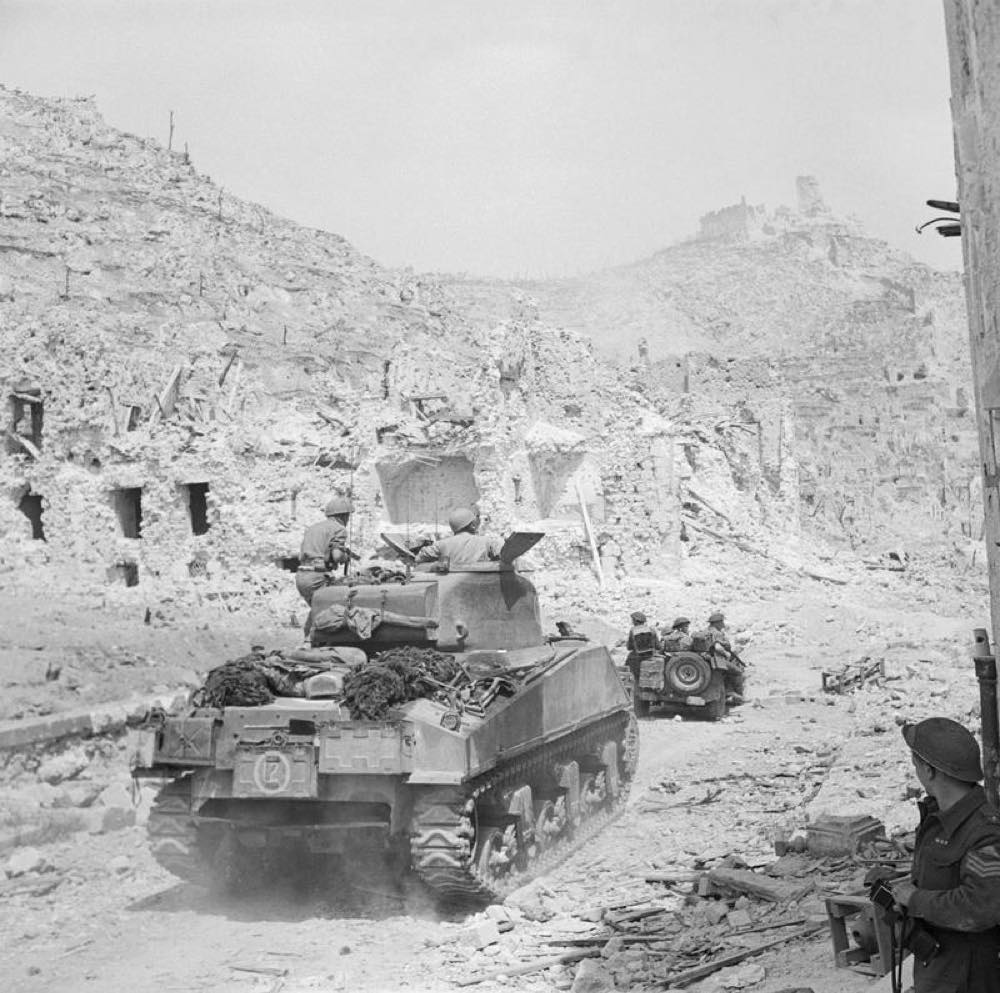
The road to Rome ran through the Liri Valley beneath the monastery of Monte Cassino, which overlooked the German Gustav Line. From January to May 1944 the Allies launched four major battles against the defenses. On February 15 Allied bombers destroyed the historic abbey even though German troops had not occupied the monastery itself before the bombing; German paratroopers then used the ruins as defensive positions. In May, a broad Allied offensive finally broke the line, and Polish troops reached the abbey ruins. Allied casualties across the battles were roughly 55,000, with substantial German losses as well. The abbey was rebuilt after the war.
Going Deeper
Monte Cassino's February bombing has been argued over for eighty years, and the argument long since stopped being about the intelligence and became about the standard: whether a commander may destroy a building of that stature on a mistaken read, and whether acting in good faith is a defense. The four battles' Allied roster (American, British, Indian, New Zealand, French colonial, and finally the Polish II Corps that took the summit) made it one of the war's most multinational fights, and each nation remembers its own Cassino, the Poles above all, whose cemetery on the mountain holds men who could not go home to a Soviet-dominated Poland. The abbey's treasures survived through a German-organized evacuation, an episode historians handle carefully since the officers involved also served looting networks elsewhere. Rebuilt 'where it was, as it was,' the abbey was reconsecrated in 1964.
Three new battles every day. Tap the globe where each one happened.
Play today's battles